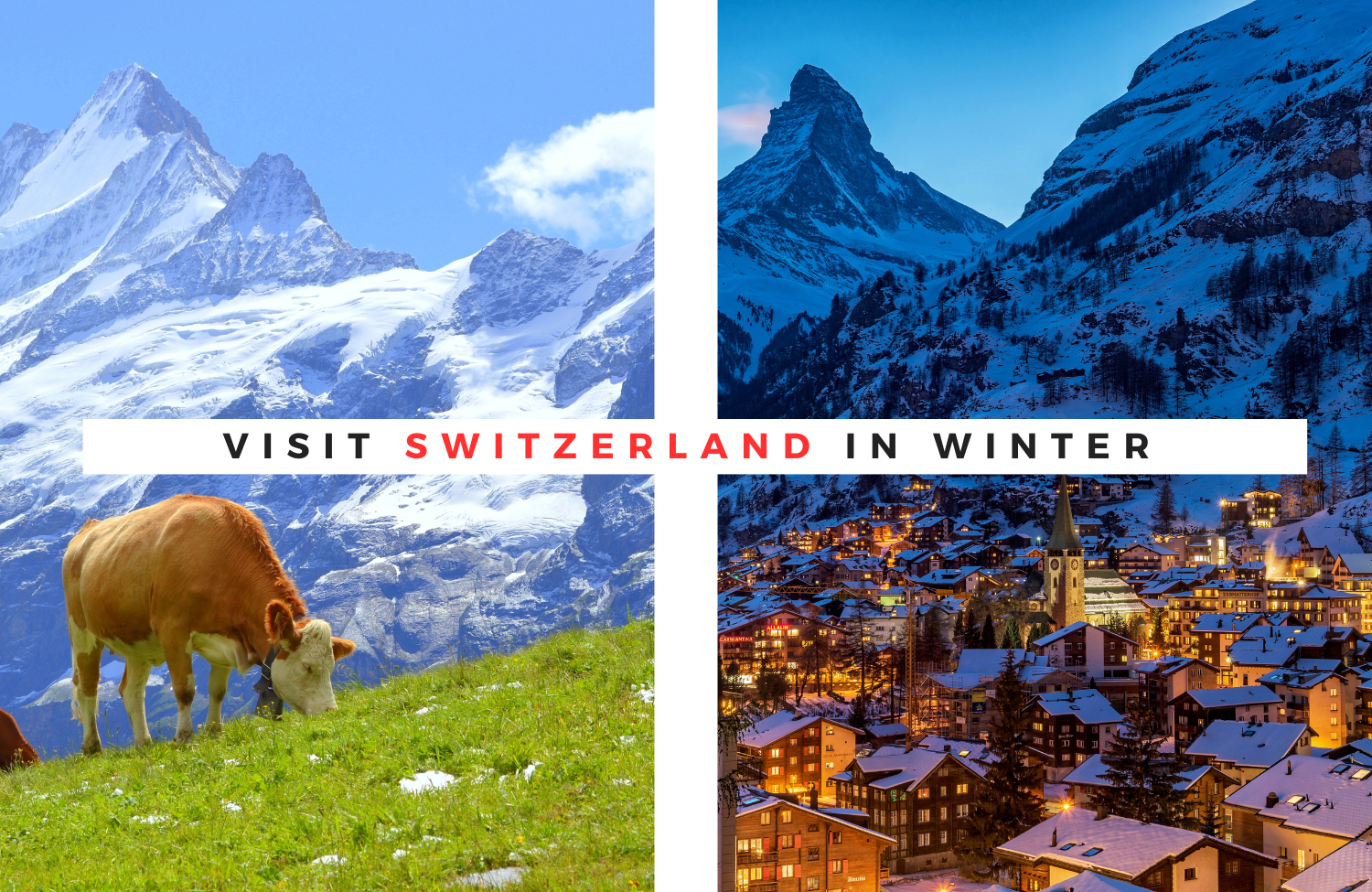
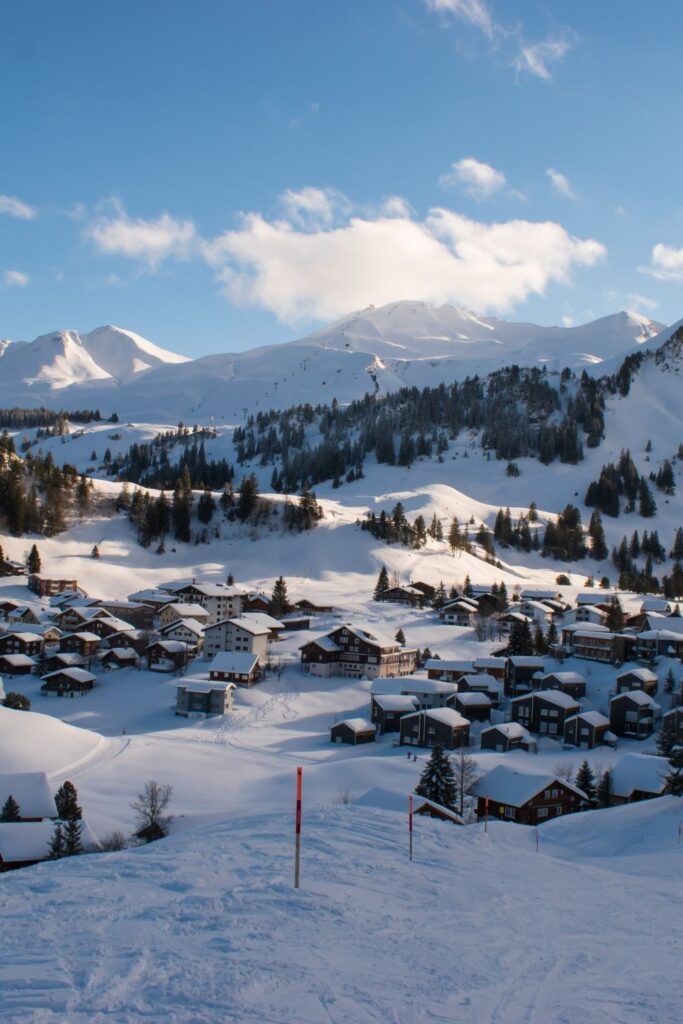
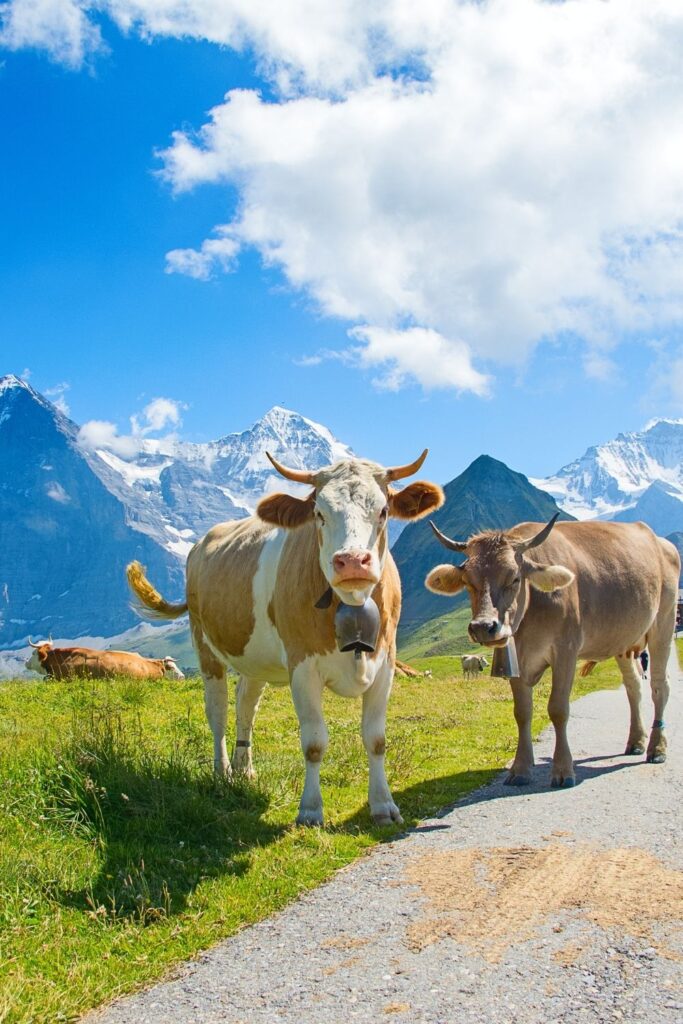
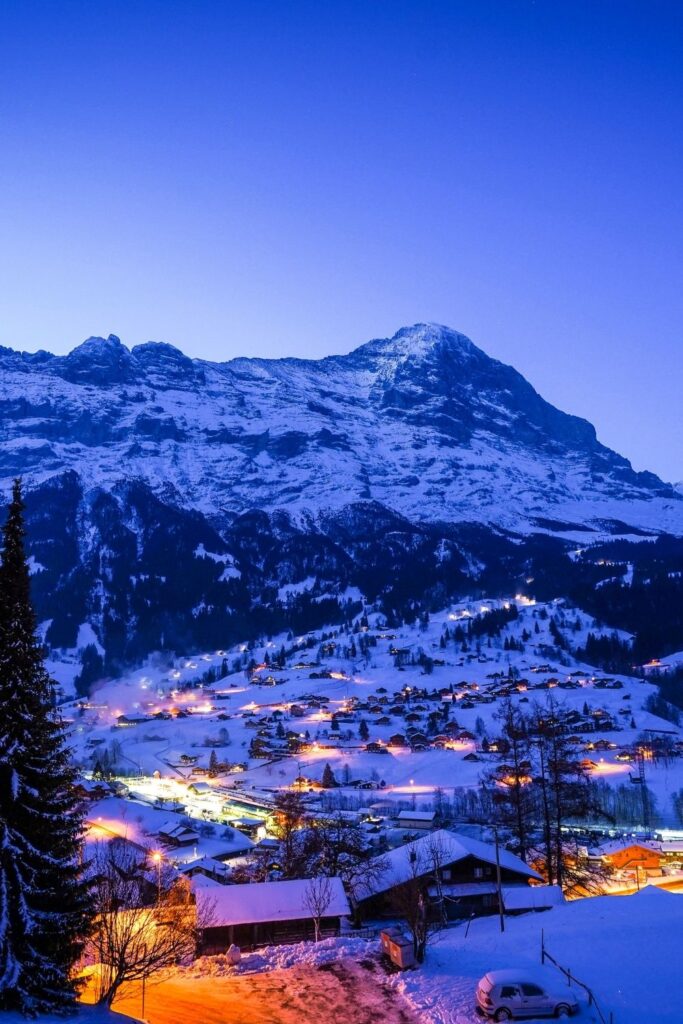
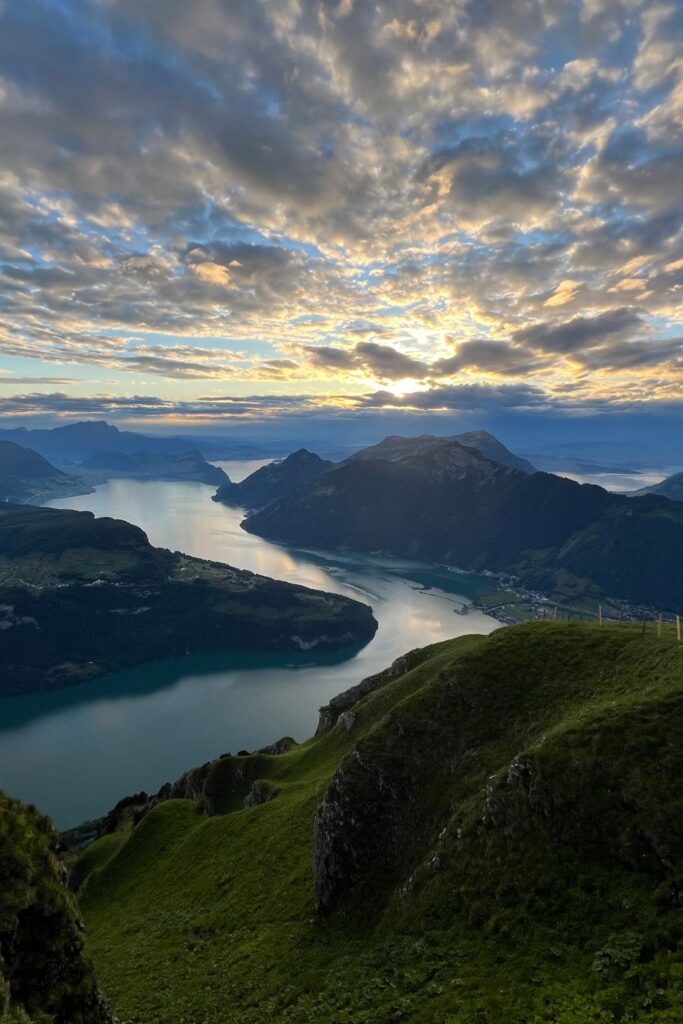
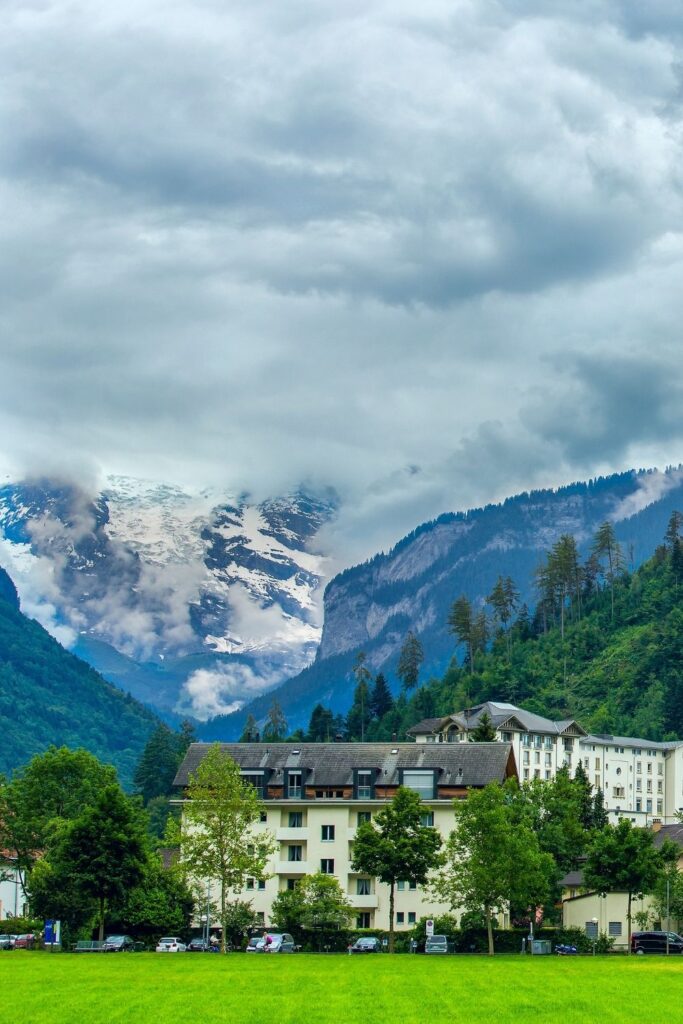
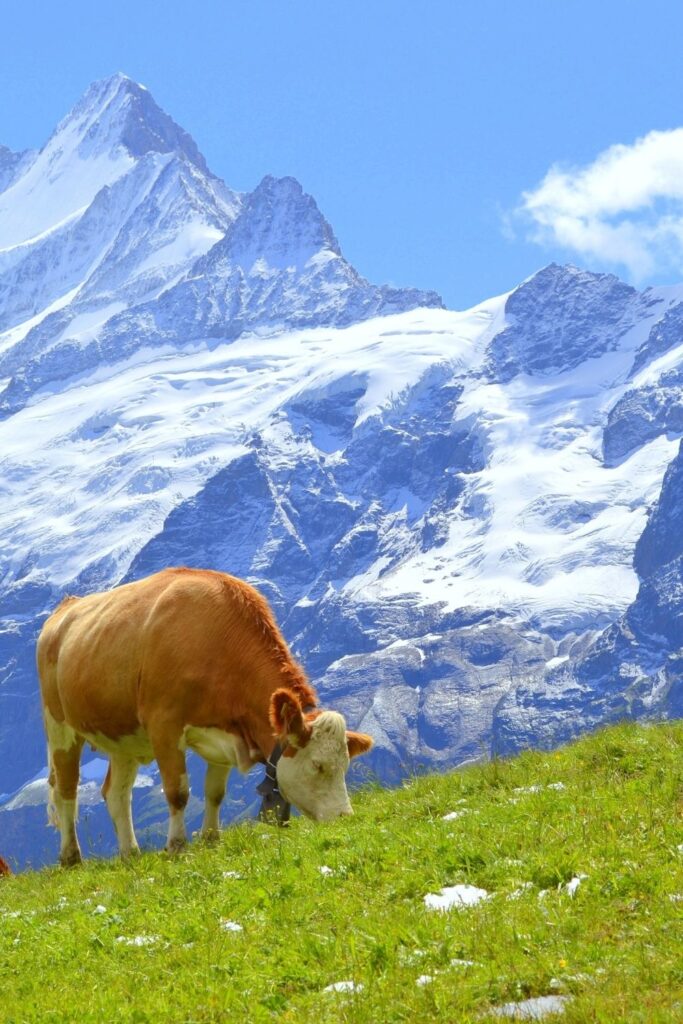
There’s something absolutely magical about Switzerland in winter that makes my heart skip a beat every time I visit. Planning the perfect Switzerland winter itinerary can feel overwhelming with so many stunning destinations to choose from, but I’m here to share my favorite spots that will make your winter adventure truly unforgettable. From snow-dusted medieval villages to adrenaline-pumping mountain activities and cozy castle visits, Switzerland in winter transforms into a wonderland that rivals any fairy tale.
I’ve spent countless winter days exploring the Swiss Alps, and each trip reveals new treasures. Whether you’re craving the thrill of paragliding over snowy peaks, the romance of a fondue dinner in a medieval town, or the serenity of dog sledding through pristine forests, this Switzerland travel guide covers the most magical things to do in Switzerland in winter that capture the essence of this alpine paradise. Let’s dive into these 15 incredible destinations and activities that deserve a spot on your Switzerland winter itinerary.
Subscribe to our Newsletter
Why sign up?
Regular posts
Travel Maps
Unique itinerary ideas
local insights on the most beautiful places in Europe and beyond
Join our community of travelers and let the adventure begin!
Newsletter
Signup for unique travel itineraries, hidden gems, tips and hacks!
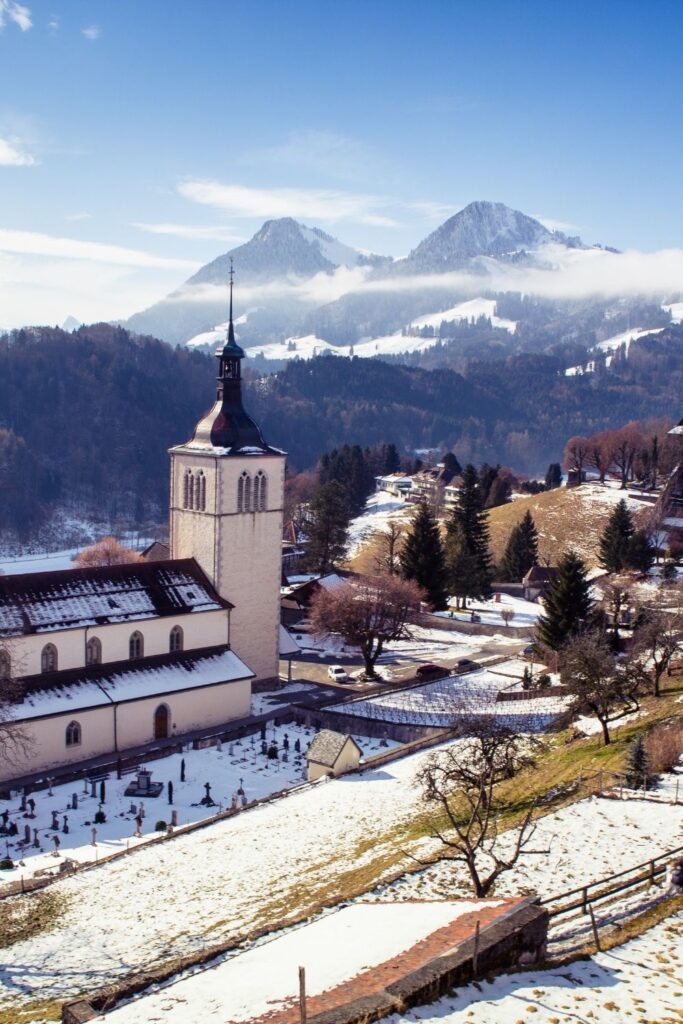
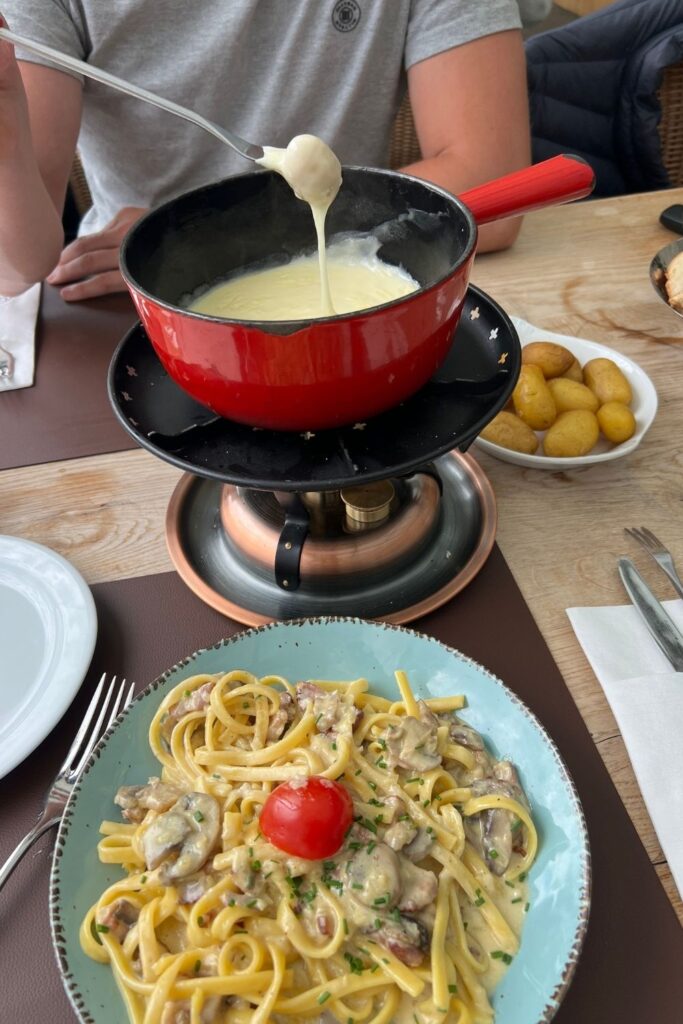
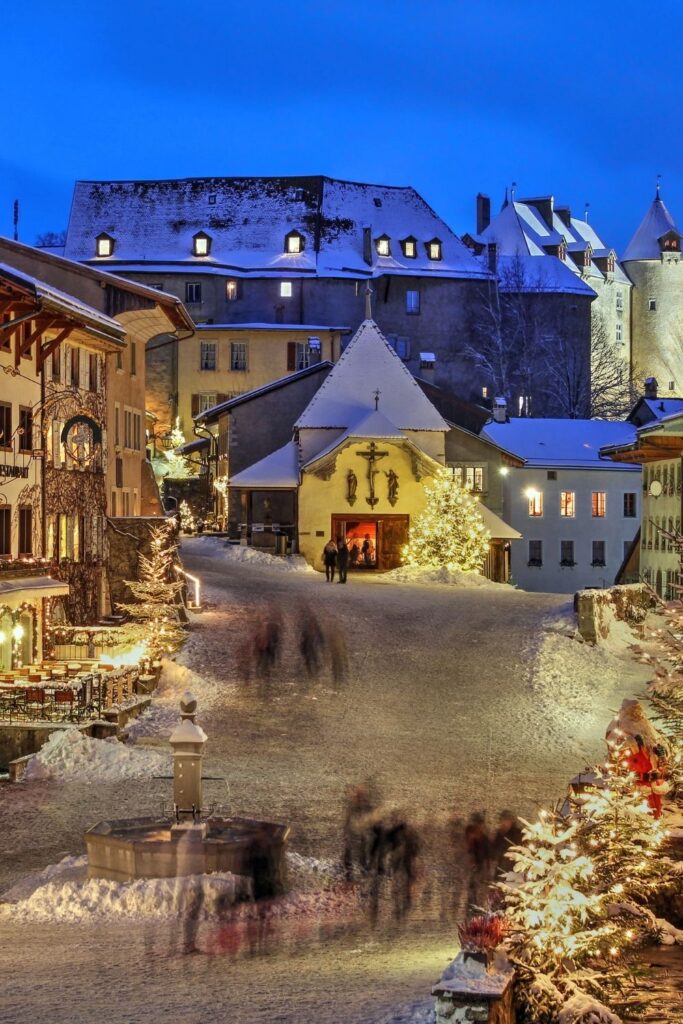
Stepping into Gruyères feels like walking straight into a medieval postcard, especially when snow blankets the cobblestone streets. This charming hilltop town in the canton of Fribourg is famous worldwide for its cheese, and there’s no better place to enjoy authentic Swiss fondue than in one of the cozy restaurants lining the main street.
What Makes It Special: The Swiss castle of Gruyères stands majestically at the top of the village, offering panoramic views of the snow-covered Pre-Alps. I’ll never forget wandering through the castle’s rooms filled with centuries of history, then warming up with the creamiest fondue I’ve ever tasted at a nearby restaurant. Visiting this Swiss castle in Switzerland in winter means fewer crowds and a truly atmospheric experience. The town is small enough to explore in a few hours, but magical enough that you’ll want to linger.
How to Get There: Take a train from major Swiss cities to Bulle, then transfer to a local train or bus to Gruyères (about 10 minutes). The journey from Zurich takes approximately 2.5 hours, and from Geneva about 1.5 hours.
Costs:
Gruyères Castle entrance: 12 CHF for adults
Fondue meal: 25-35 CHF per person
Free to wander the village streets
Pro Tip: Visit the Maison du Gruyère cheese factory at the base of the hill before heading up to the medieval town. You can watch cheese being made and sample some of the freshest Gruyère you’ll ever taste!
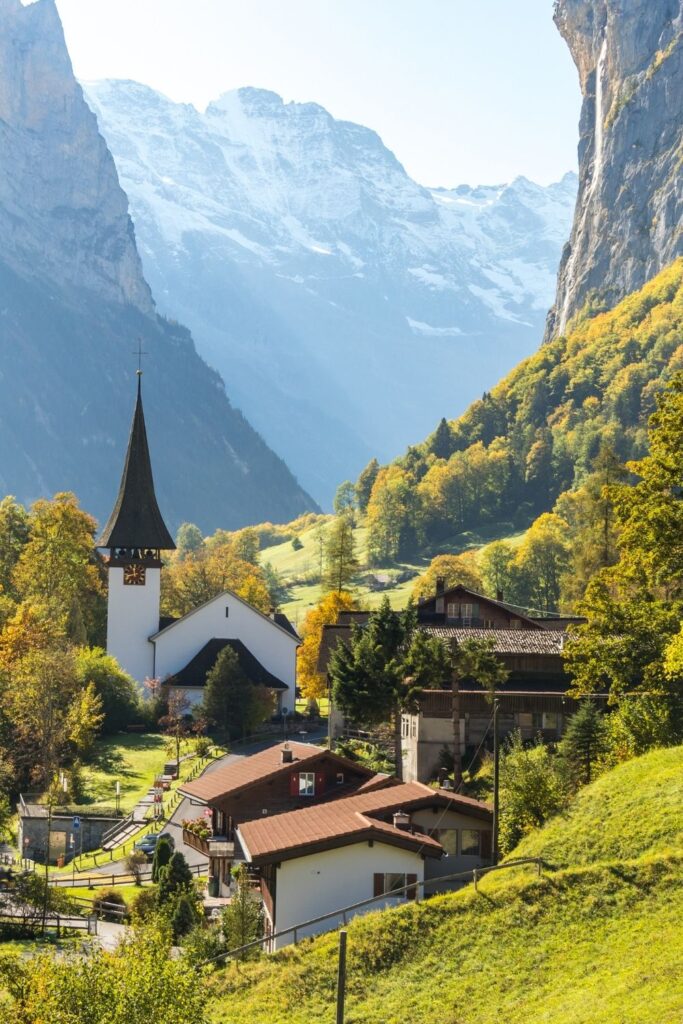
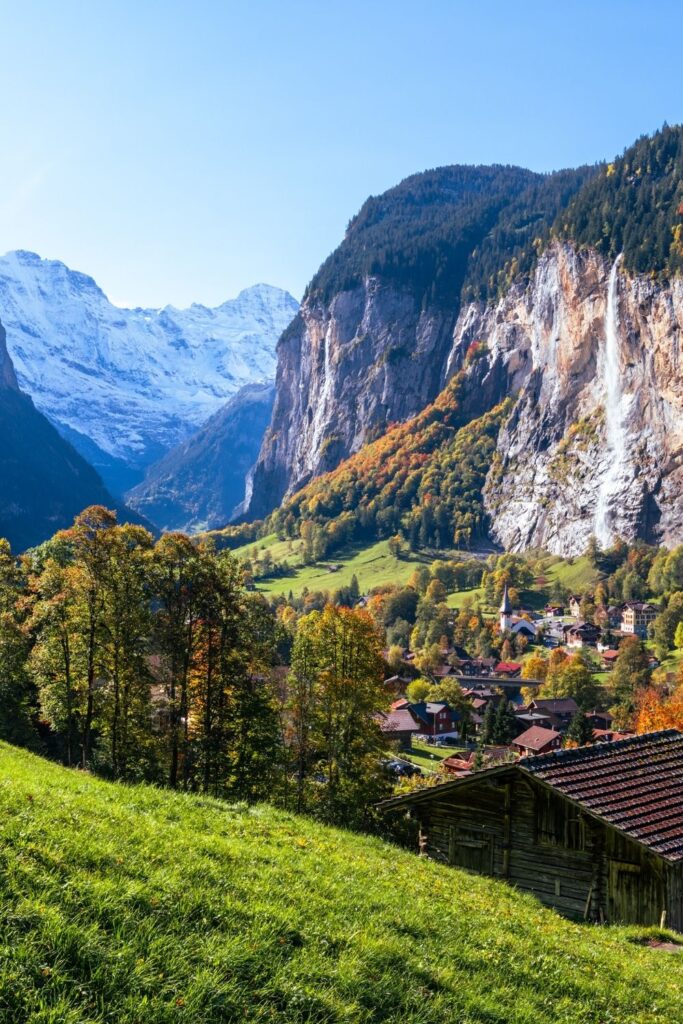
Lauterbrunnen is hands-down one of the most breathtaking valleys I’ve ever seen, and it’s even more spectacular when winter Switzerland transforms its 72 waterfalls into frozen cascades. Nestled between towering cliffs that rise nearly 1,000 feet on either side, this village feels like nature’s cathedral and represents the Swiss Alps aesthetic winter at its finest.
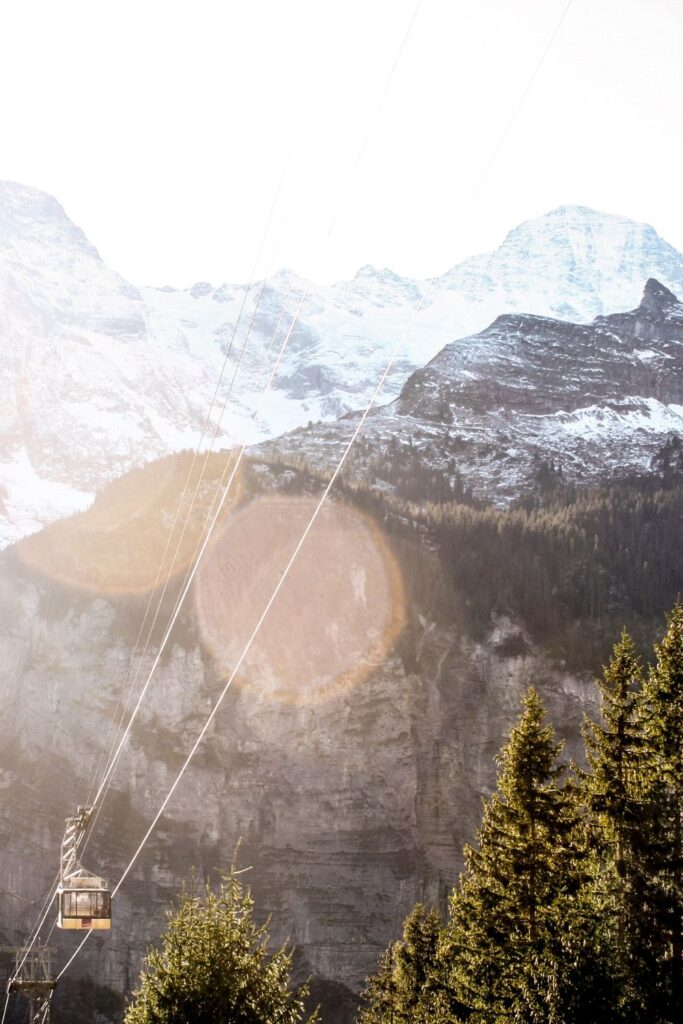
What Makes It Special: The Staubbach Falls, which plunges 300 meters down the cliff face, partially freezes in winter creating an ethereal ice sculpture. The valley serves as the perfect base for exploring the Jungfrau region, with cable cars whisking you up to mountain villages like Wengen and Mürren. I love starting my mornings here with the mist rising from the valley floor as the sun hits the snowy peaks—one of the most beautiful snowy places in all of Switzerland.
How to Get There: Lauterbrunnen is easily accessible by train from Interlaken Ost (20 minutes). From Zurich or Bern, take a train to Interlaken and transfer.
Costs:
Accommodation ranges from 80-250 CHF per night depending on your budget
Cable car to Mürren: approximately 30 CHF round trip
Many hiking trails in the valley are free
Insider Tip: Take an evening walk through the valley when most tourists have left. The frozen waterfalls illuminated by moonlight create an almost otherworldly atmosphere.
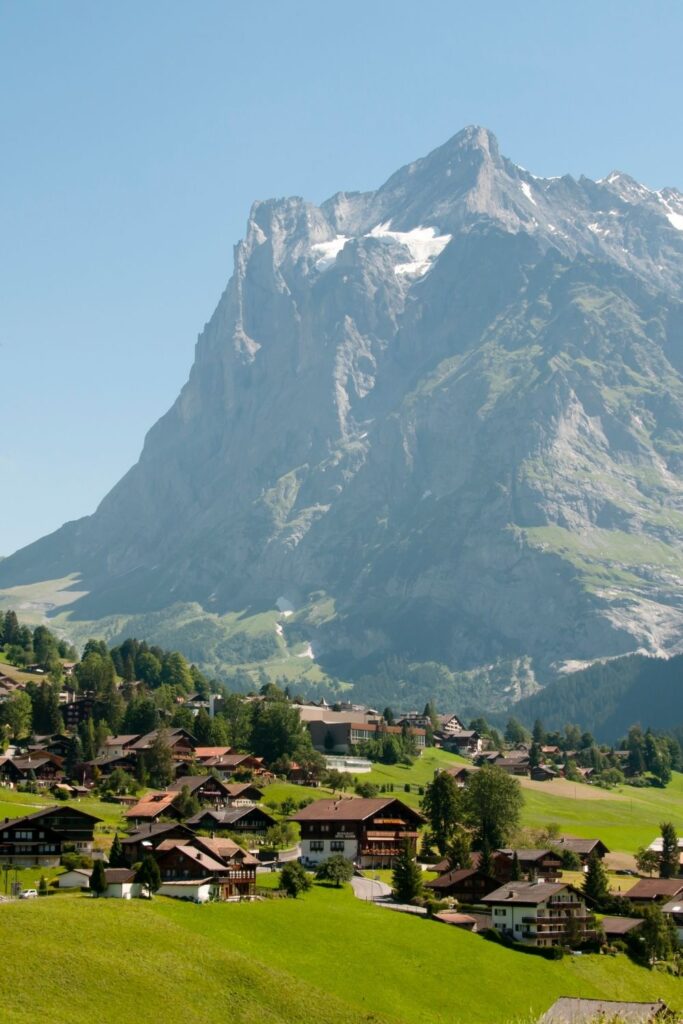
Grindelwald stole my heart the moment I arrived, and it continues to be one of my favorite destinations for Switzerland in winter. This charming alpine village sits beneath the iconic north face of the Eiger and offers world-class skiing, stunning scenery, and that quintessential Swiss charm.
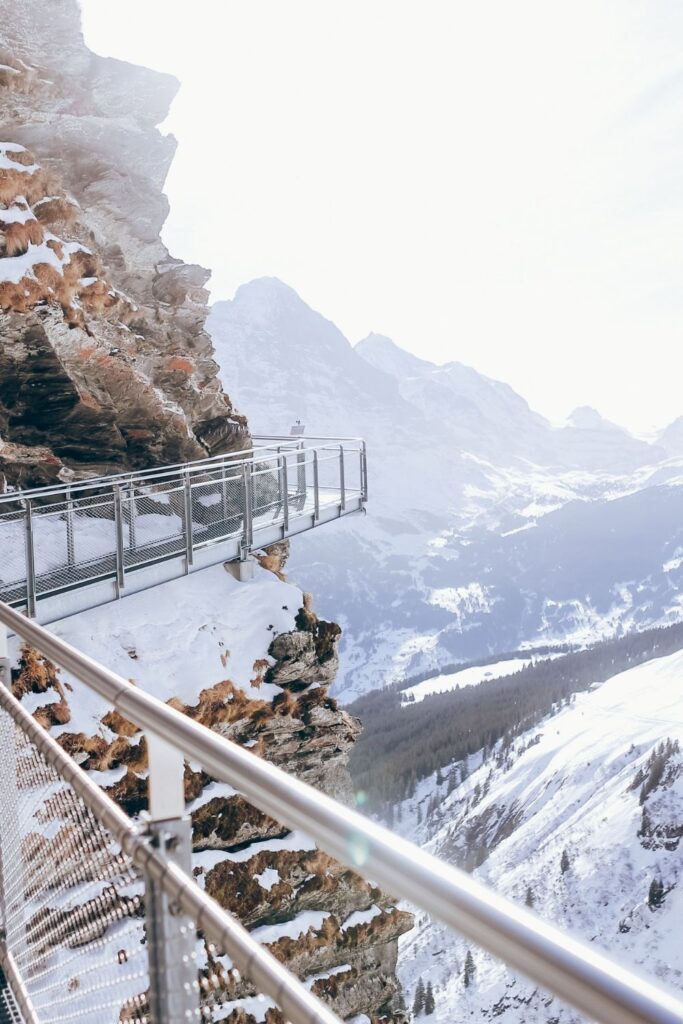
What Makes It Special: Beyond the incredible skiing and snowboarding, Grindelwald serves as a gateway to some of Switzerland’s most famous peaks. The village itself is postcard-perfect with traditional chalets, cozy restaurants, and views that make you stop in your tracks. I particularly love the First Cliff Walk by Tissot, a suspended walkway that’s accessible year-round and offers heart-stopping views—definitely one of the top things to do in Switzerland in winter.
How to Get There: Direct trains run from Interlaken Ost to Grindelwald (about 35 minutes). From major cities like Zurich or Bern, you’ll transfer through Interlaken.
Costs:
Ski pass: approximately 70-85 CHF per day
Accommodation: 100-300 CHF per night
Gondola to First: around 60 CHF round trip
Pro Tip: Purchase the Jungfrau Travel Pass if you’re planning to explore multiple peaks and villages in the region. It offers significant savings and includes most mountain railways and cable cars.
Stoos is Switzerland’s hidden gem that fewer tourists know about, which makes it even more special. This car-free village sits on a sunny plateau at 1,300 meters and is accessible only by the world’s steepest funicular railway, which is an adventure in itself!
What Makes It Special: The tranquility here is unmatched. Without cars, the only sounds you’ll hear are the swish of skis, happy chatter, and maybe some cowbells. The village offers family-friendly skiing, pristine hiking trails, and some of the most peaceful winter scenery I’ve experienced—a true hidden gem among snowy places in the Alps. It’s also much less crowded than famous resorts like Zermatt or St. Moritz, making it perfect for your Switzerland winter itinerary.
How to Get There: Take a train to Schwyz, then a bus to Schlattli, where you’ll board the funicular to Stoos. The funicular ride itself is unforgettable with a gradient reaching 110%.
Costs:
Funicular round trip: approximately 30 CHF
Ski pass: around 50 CHF per day (more affordable than major resorts)
Accommodation: see below (Fronalpstock hotel)
Insider Tip: Visit the Fronalpstock peak (more on that next) for sunrise. The cable car starts early, and watching the sun paint the Alps pink and gold is absolutely magical.
If you’re interested in this wonderful village, please refer to our complete article about Stoos!
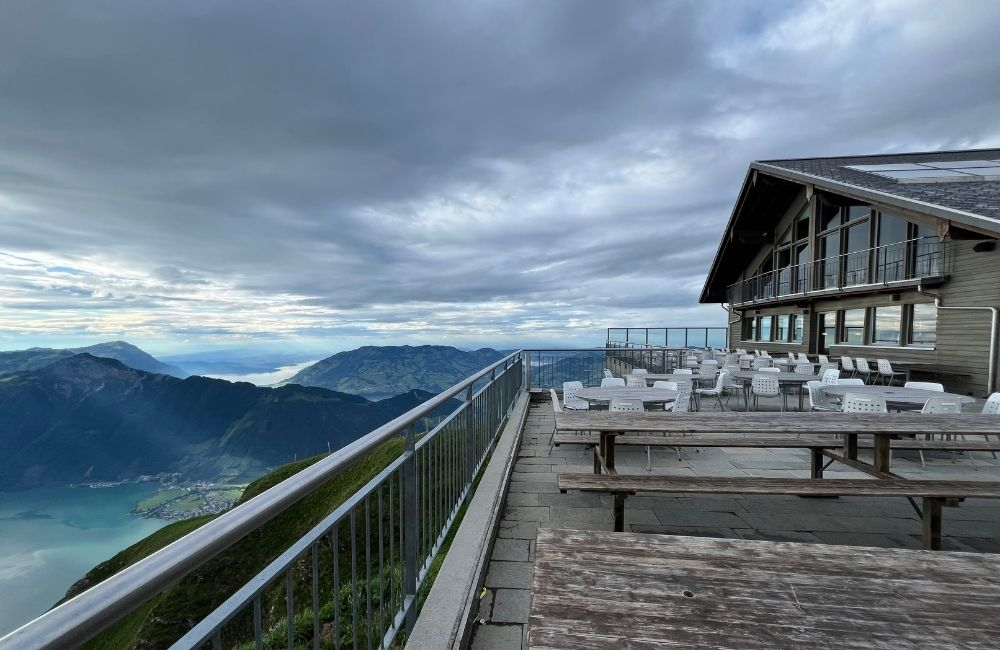
Staying at the Fronalpstock Hotel was one of the most unique experiences of my life. Perched at 1,922 meters above sea level, this mountain hotel offers rooms with floor-to-ceiling windows overlooking ten Swiss lakes and an endless sea of Alpine peaks—the epitome of Swiss Alps aesthetic winter.
What Makes It Special: Imagine waking up above the clouds with a 360-degree panorama of snow-covered mountains in Switzerland in winter. The hotel’s modern design features minimalist rooms where the view is the star. I spent hours just sitting by the window, watching weather systems roll through the valleys below. The restaurant serves delicious Swiss cuisine, and there’s even a small chapel nearby that’s popular for winter weddings.
How to Get There: From Stoos village, take the cable car directly to Fronalpstock (about 7 minutes). The hotel is right at the top station.
Costs:
Rooms start around 200-350 CHF per night (includes breakfast)
Dinner at the restaurant: 40-60 CHF per person
Cable car from Stoos: included in Stoos area pass or around 25 CHF
Pro Tip: Book a room on the lake-facing side for the most spectacular sunrise views. Also, the hotel can arrange romantic surprises like private fondue dinners with the view—perfect for special occasions!
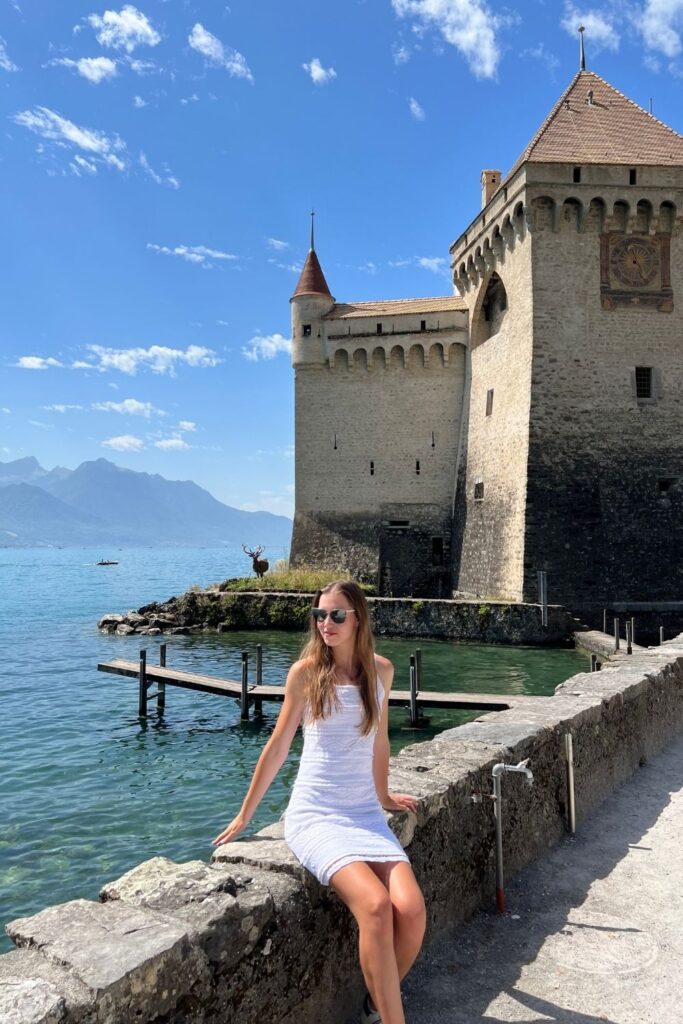
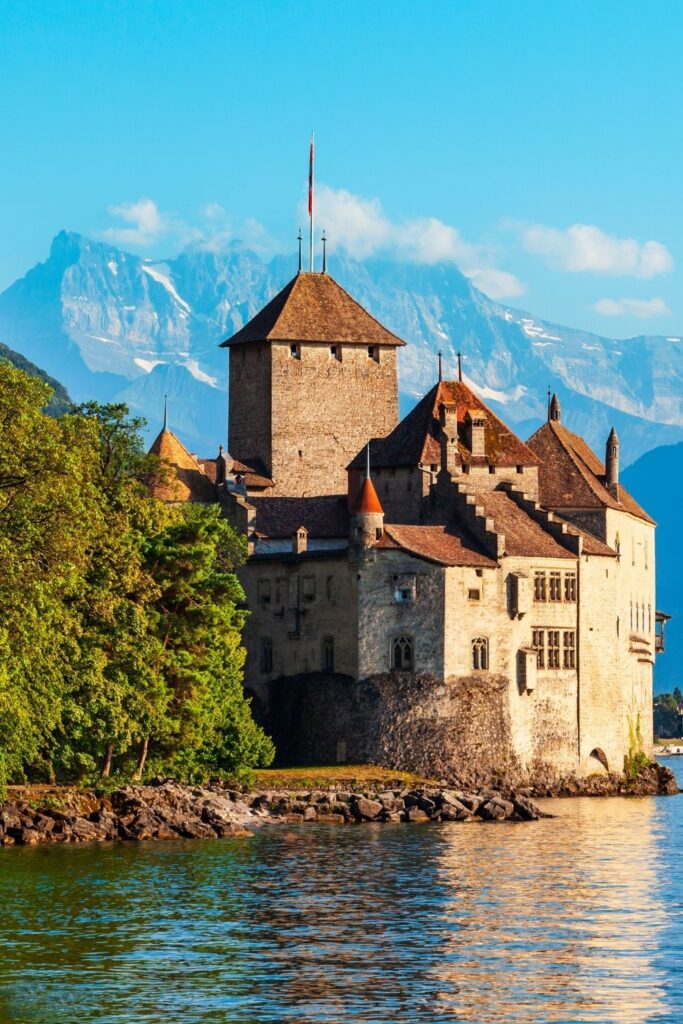
Chillon Castle is straight out of a storybook, sitting majestically on the shores of Lake Geneva with the Alps as a backdrop. I’ve visited many castles across Europe, but there’s something particularly enchanting about this Swiss castle in winter when snow dusts the turrets and the lake reflects the mountains.
What Makes It Special: This medieval fortress dates back to the 12th century and is remarkably well-preserved. You can explore over 25 buildings including underground vaults, grand halls, and bedchambers filled with period furniture. Lord Byron was so inspired by this Swiss castle that he wrote his famous poem “The Prisoner of Chillon” here. Walking through the castle during winter Switzerland means fewer crowds and a more atmospheric experience.
How to Get There: The castle is located just outside Montreux. Take a train to Veytaux-Chillon station (it’s a 5-minute walk from there) or bus line 201 from Montreux directly to the castle.
Costs:
Castle entrance: 13.50 CHF for adults
Audio guide: included with admission
Free parking if you’re driving
Insider Tip: Visit late afternoon in winter when the low sun creates dramatic lighting through the castle windows. The Great Hall becomes particularly photogenic with golden light streaming in.
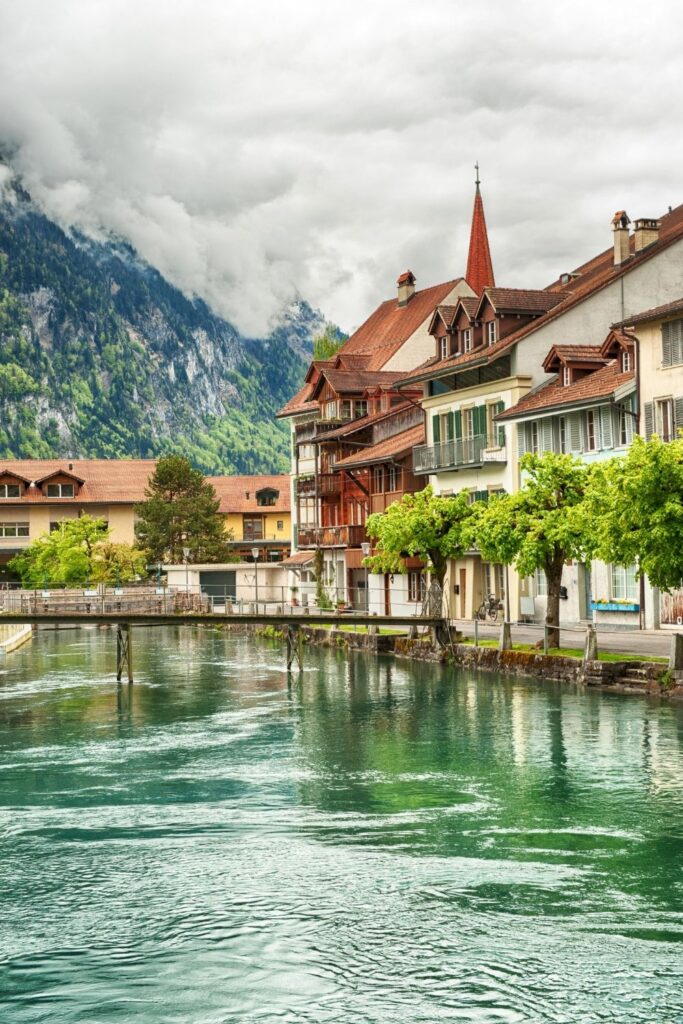
Interlaken serves as the adventure capital of Switzerland and the perfect hub for exploring the Bernese Oberland. Situated between Lake Thun and Lake Brienz (hence the name “between lakes”), this town offers stunning views of the Eiger, Mönch, and Jungfrau mountains and is an essential stop on any Switzerland winter itinerary.
What Makes It Special: While Interlaken itself is more of a base than a destination, its location is unbeatable for planning things to do in Switzerland in winter. I love strolling along the Höheweg, the main street with unobstructed views of the Jungfrau massif. The town offers everything from budget hostels to luxury hotels, plus endless restaurants and shops. It’s also the starting point for countless winter activities and mountain excursions.
How to Get There: Interlaken has excellent train connections. Direct trains run from Zurich (2 hours), Bern (1 hour), and Lucerne (2 hours). There are two stations: Interlaken West and Interlaken Ost.
Costs:
Accommodation: 70-300 CHF per night (wide range available)
Meals: 20-50 CHF per person
Most mountain railways depart from Interlaken Ost
Pro Tip: Stay near Interlaken Ost station if you plan to take early trains to Lauterbrunnen, Grindelwald, or Jungfraujoch. You’ll save precious time in the mornings!
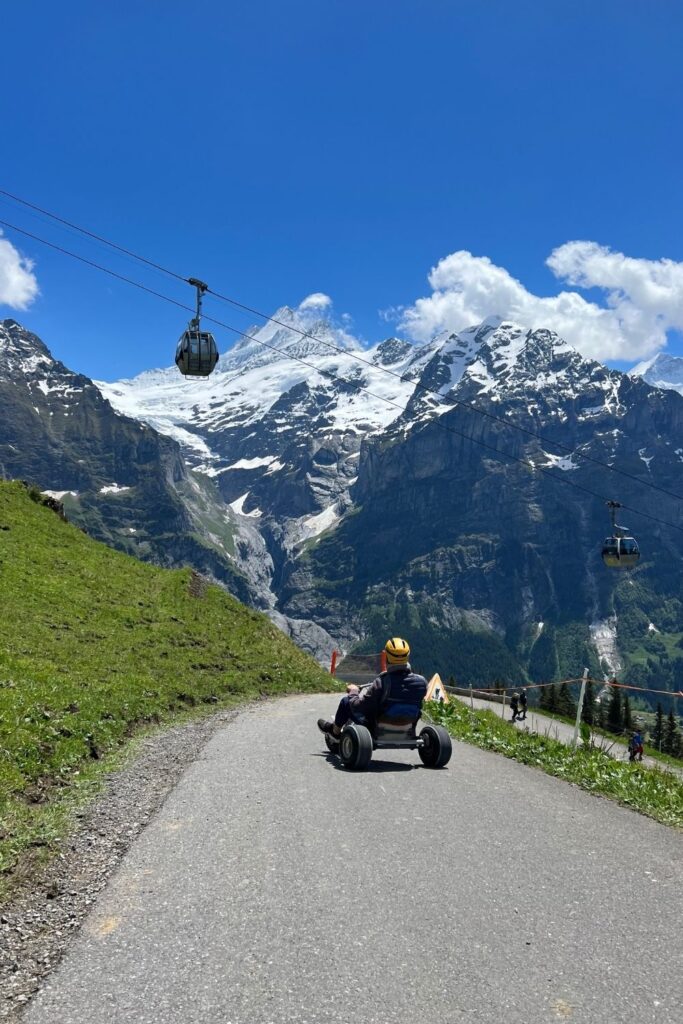
The First peak near Grindelwald is an absolute playground for adventure seekers, and yes, it’s incredible in Switzerland in winter! While some activities are summer-only, the winter offerings here are equally thrilling and the views are arguably even more spectacular with snow blanketing everything.
What Makes It Special: The First Cliff Walk by Tissot is a suspended walkway that extends 40 meters out from the cliff face at 2,168 meters altitude. My heart was pounding as I walked along it, but the 360-degree views of the Eiger, Wetterhorn, and surrounding peaks were worth every nervous step. In winter, you can ski or snowboard down excellent runs, go sledding, or simply hike through the pristine snow—it’s one of the best things to do in Switzerland in winter for adventure lovers.
How to Get There: Take the gondola from Grindelwald to First (about 25 minutes). The gondola operates year-round, weather permitting.
Costs:
Gondola round trip: approximately 60 CHF
Sledding: around 8 CHF for sled rental
Most viewing platforms and walks: free once you’re up there
Full-day combined ticket with activities: around 75 CHF
Activities Available:
First Cliff Walk (free, winter accessible)
Mountain hiking trails
Restaurant at the top station
Photography opportunities galore
Winter sledding runs
Insider Tip: Go up First on a clear morning and stay for lunch at the mountain restaurant. The cheese spätzle there is heavenly, and the afternoon light on the Eiger is photographer’s gold.
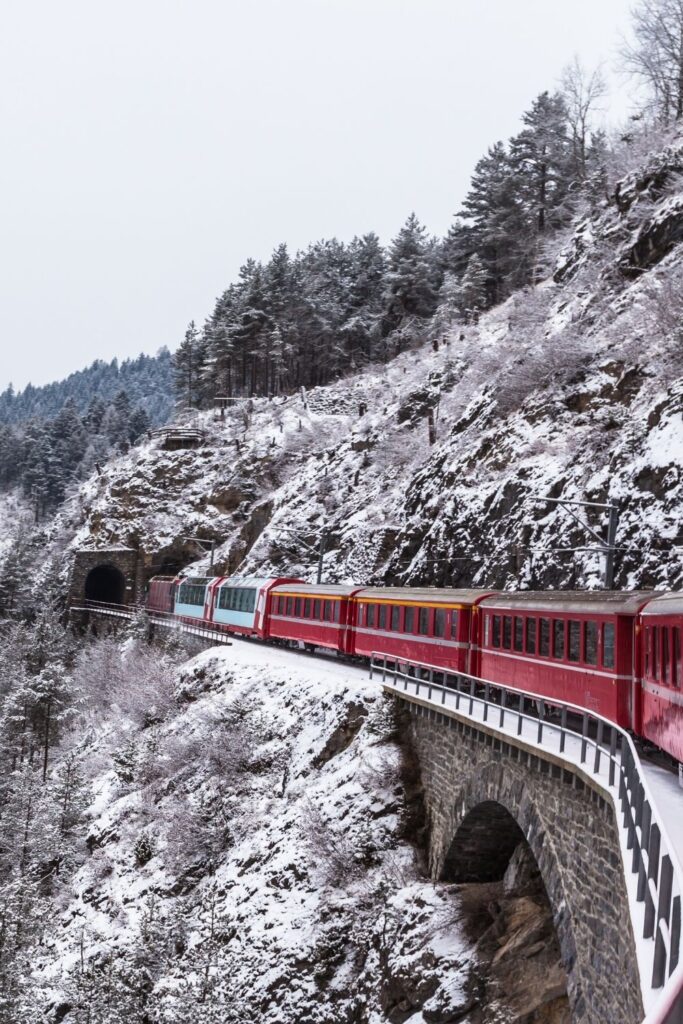
The Glacier Express isn’t just a train ride—it’s an eight-hour journey through the heart of the Swiss Alps that ranks among the most scenic rail experiences in the world. I treated myself to this journey one winter, and it remains one of my favorite travel memories and a highlight of any Switzerland winter itinerary.
What Makes It Special: This panoramic train travels from Zermatt to St. Moritz (or vice versa), crossing 291 bridges and going through 91 tunnels. The large panoramic windows ensure you don’t miss a single snow-capped peak, frozen waterfall, or charming mountain village. In winter Switzerland, the landscapes transform into a pristine white wonderland that’s simply mesmerizing. The journey crosses the Oberalp Pass at 2,033 meters—the highest point of the route.
How to Get There: Board at either Zermatt or St. Moritz. You can also join at intermediate stations like Andermatt or Chur if you prefer a shorter journey.
Costs:
Seat reservation (mandatory): 39 CHF in winter
Train ticket: covered by Swiss Travel Pass or regular Swiss rail passes, otherwise approximately 150 CHF
Excellence Class upgrade: around 420 CHF (includes gourmet meal service)
Regular 2nd class full journey: roughly 150-180 CHF
Duration: Approximately 8 hours for the full journey
Pro Tip: Book a seat on the right side of the train when traveling from Zermatt to St. Moritz for the best views of the Matterhorn and other famous peaks. Bring snacks and water, though there’s also a meal service available for purchase.
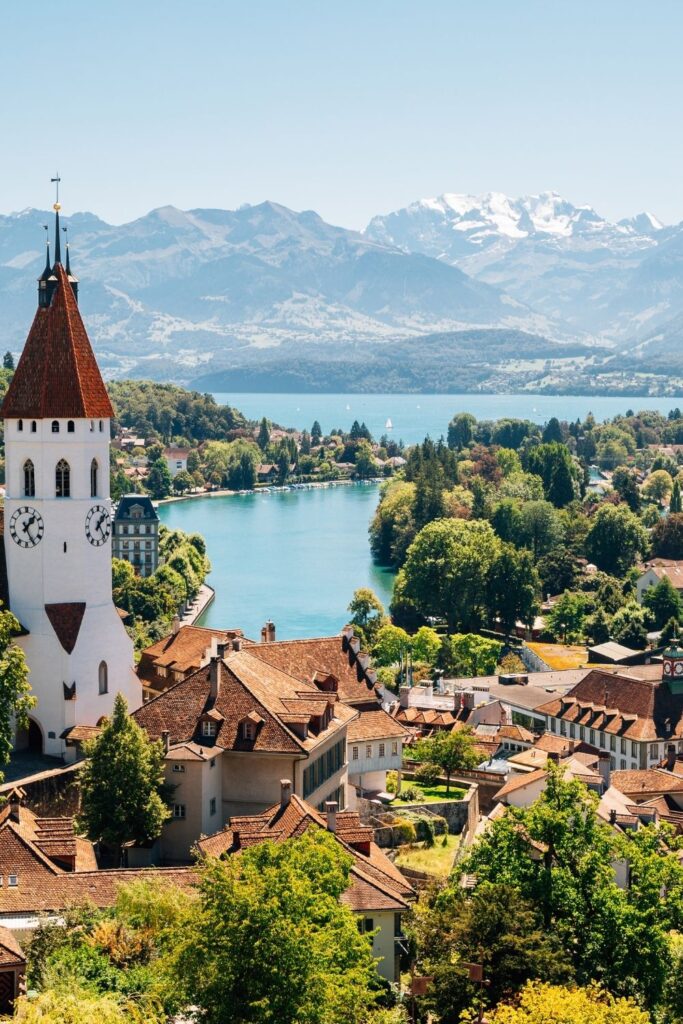
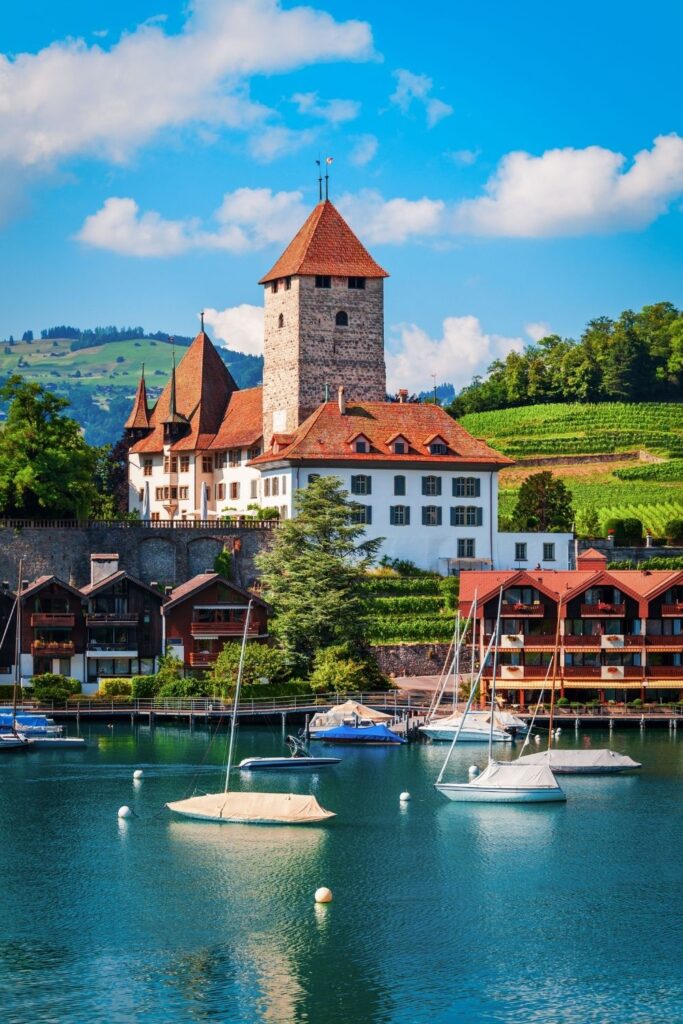
Schloss Spiez is one of those places that made me gasp out loud when I first saw it. This fairytale Swiss castle sits on the shores of Lake Thun, with its distinctive church tower reflected in the crystal-clear waters and the Alps rising dramatically behind it.
What Makes It Special: Dating back over 1,000 years, this castle has been remarkably preserved and features beautiful baroque halls, a romantic rose garden, and a small museum. In Switzerland in winter, the castle takes on a peaceful, almost magical quality with snow on the rooftops and the lake often shrouded in mist. The castle’s vineyard slopes down to the lake, and the entire setting looks like something from a winter romance novel.
How to Get There: Take a train to Spiez station (on the main line between Bern and Interlaken). The castle is about a 15-minute walk from the station, following signs through the charming village.
Costs:
Castle entrance: 10 CHF for adults
Castle and museum: 14 CHF
Grounds and park: free to explore
Parking: available near the castle
Insider Tip: Walk down to the small boat harbor next to the castle for the most photogenic angle. The church tower, castle walls, and mountain backdrop create the perfect composition, especially during golden hour.
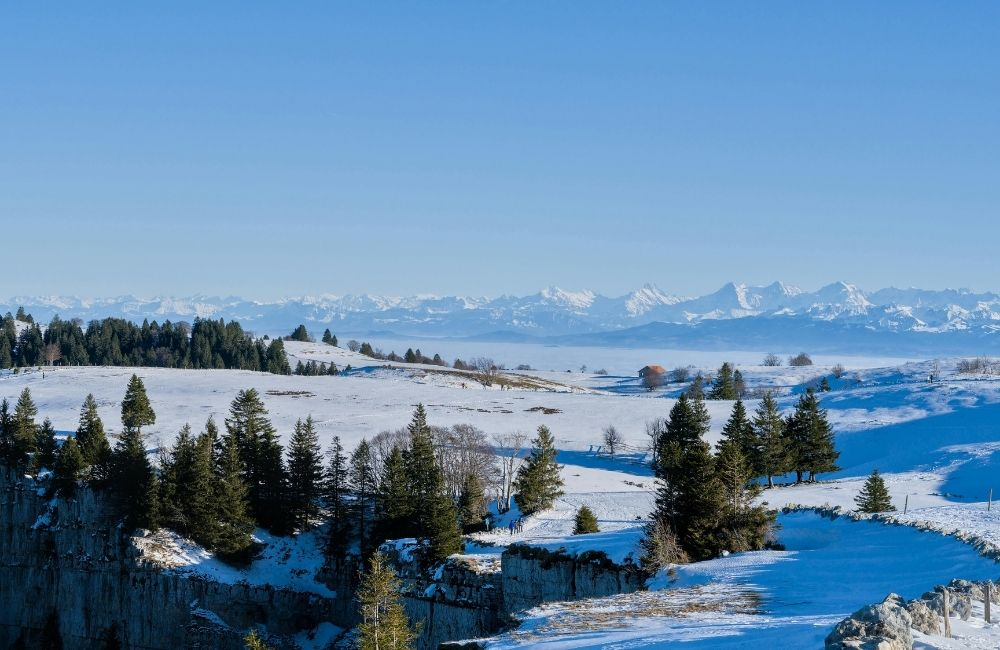
The Jura Vaudois Nature Park opened my eyes to a completely different side of Switzerland in winter—one that’s more rugged, wild, and peaceful than the famous Alpine regions. This vast protected area spans rolling hills, dense forests, and traditional farming villages in western Switzerland.
What Makes It Special: In winter, the Jura transforms into a cross-country skiing and snowshoeing paradise. The landscape here is gentler than the high Alps, with endless forests covered in pristine snow and far fewer tourists. I love the authentic Swiss rural culture here—you’ll find small farms producing local cheese, traditional restaurants serving regional specialties, and a slower pace of life. It’s perfect for those seeking quieter winter trips away from busy ski resorts.
How to Get There: The park is accessible from several villages including Le Brassus, Saint-Cergue, and Sainte-Croix. From Geneva or Lausanne, trains reach these villages in 1-2 hours.
Costs:
Entry to the park: free
Cross-country ski pass: approximately 10-15 CHF per day
Ski equipment rental: around 25-30 CHF per day
Guided snowshoe tours: 40-60 CHF per person
Activities:
Over 200 km of cross-country ski trails
Snowshoeing routes through forests
Winter hiking
Wildlife spotting (lynx, chamois, and various birds)
Pro Tip: Stay in one of the traditional farmhouse B&Bs for an authentic experience. Many serve hearty breakfasts with homemade cheese and bread—perfect fuel before a day in the snow.
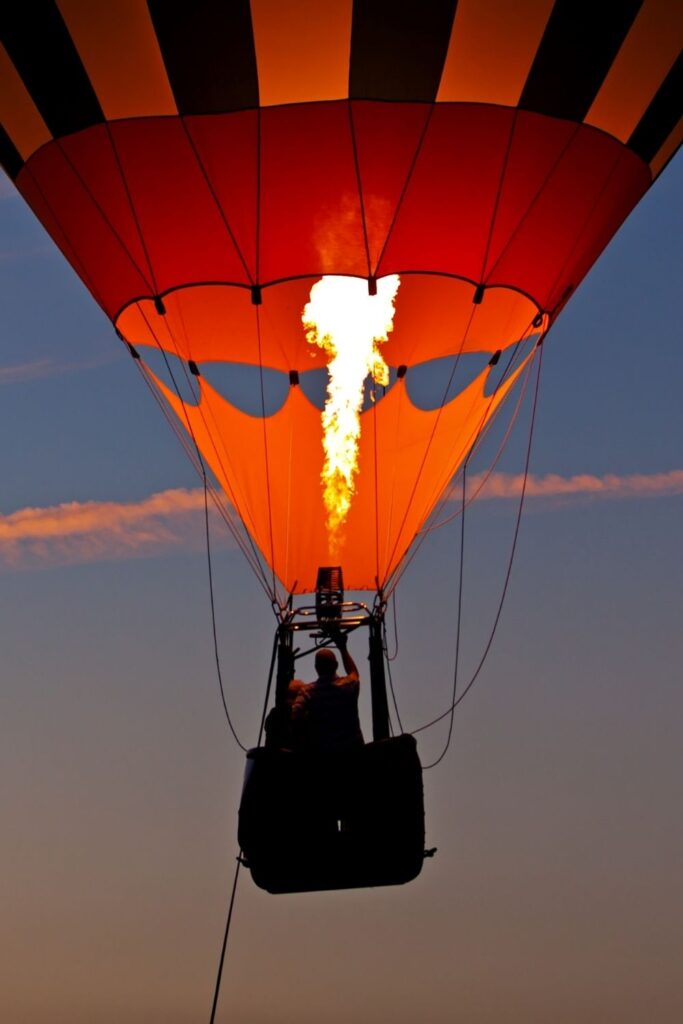
Château-d’Oex might be a small Alpine village, but it’s world-famous for one spectacular reason: hot air balloons. Each January, this charming town hosts the International Hot Air Balloon Festival, drawing pilots and spectators from around the globe—a truly unique addition to your Switzerland winter itinerary.
What Makes It Special: Watching dozens of colorful hot air balloons float gracefully above the snowy Alps is absolutely surreal. Even if you don’t visit during the festival, Château-d’Oex is one of the best places in the world for hot air balloon flights thanks to its unique microclimate and protected valley. The village itself is adorable, with traditional chalets and a rich ballooning heritage showcased in the local museum.
How to Get There: Take a train from Montreux through the scenic Pays-d’Enhaut valley (about 1.5 hours). The journey itself is beautiful, passing through small villages and alongside mountain streams.
Costs:
Hot air balloon flight: 350-450 CHF per person (1-1.5 hours)
Festival attendance: free (usually late January)
Balloon museum: 10 CHF
Accommodation: 100-200 CHF per night
Festival Dates: The International Hot Air Balloon Festival typically runs for nine days in late January. Check specific dates when planning your trip.
Insider Tip: If you’re not visiting during the festival, you can still book a private balloon flight year-round (weather permitting). Early morning flights offer the best conditions and most spectacular lighting on the snow-covered peaks.
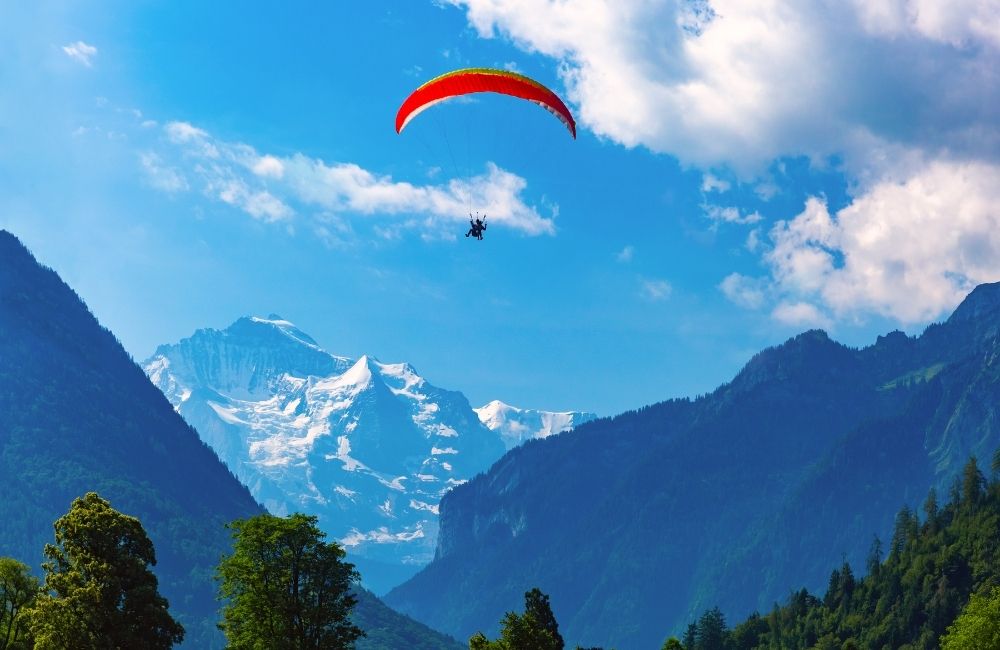
Paragliding in the Swiss Alps in winter is one of the most exhilarating things to do in Switzerland in winter. Yes, it’s cold up there, but bundled up properly and soaring silently above pristine snow-covered valleys with nothing but the wind is an indescribable experience.
What Makes It Special: Several Swiss locations offer tandem paragliding flights in winter, with Interlaken, Grindelwald, and Lauterbrunnen being the most popular launch sites. You’re strapped to an experienced pilot, so no experience is necessary. The flights typically last 15-30 minutes, and the bird’s-eye view of the Eiger, Mönch, and Jungfrau is absolutely breathtaking. I felt like I was flying through a postcard of Switzerland in winter!
Where to Book:
Interlaken: Multiple operators near Interlaken Ost
Grindelwald: Flights from First or Männlichen
Verbier and Zermatt also offer winter flights
Costs:
Standard tandem flight (15-20 minutes): 150-180 CHF
Longer flight (30+ minutes): 200-250 CHF
Photos and videos: usually 30-50 CHF extra
Typically includes transportation to launch site
Duration: Plan for 2-3 hours total including transportation to launch site, preparation, flight, and return.
What to Wear: Dress warmly in layers! The temperature drops significantly at altitude. Operators usually provide gloves and goggles.
Pro Tip: Book your paragliding early in your trip with flexible dates. Flights depend entirely on weather conditions, so having backup days increases your chances of getting airborne. Morning flights typically offer calmer conditions and better visibility.
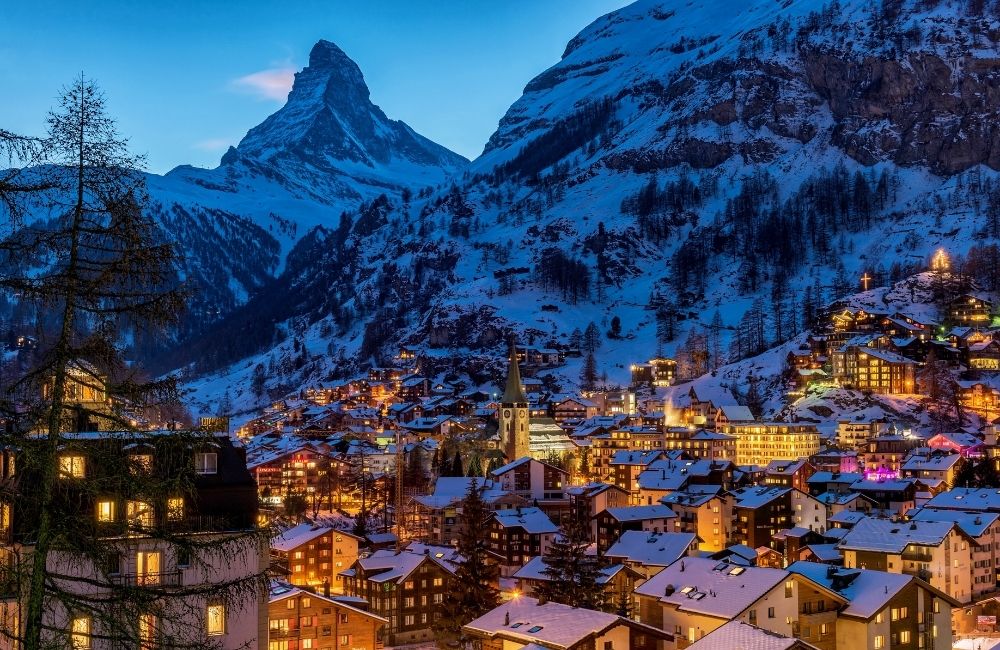
Zermatt is the crown jewel of Swiss Alpine villages, and I never tire of visiting. Home to the iconic Matterhorn—arguably the most photographed mountain in the world—this car-free resort town offers world-class skiing, upscale dining, and that unmistakable Swiss mountain magic that defines Switzerland in winter.
What Makes It Special: The Matterhorn dominates every view, its perfect pyramid shape rising 4,478 meters above sea level. Zermatt’s main street, Bahnhofstrasse, is lined with luxury boutiques, traditional restaurants, and charming hotels. The skiing here is phenomenal with access to over 360 kilometers of runs, many staying open until late April. But even if you don’t ski, the mountain excursions, especially to Gornergrat, offer some of the most spectacular views in winter Switzerland.
How to Get There: Zermatt is car-free, so you’ll take a train to Täsch and then board the Matterhorn Gotthard Bahn shuttle train (10 minutes) to Zermatt. From major cities, expect 3-4 hours of scenic train travel.
Costs:
Accommodation: 150-500+ CHF per night (luxury options available)
Ski pass: approximately 90-100 CHF per day
Gornergrat Railway: around 100 CHF round trip
Meals: 25-80 CHF per person (wide range)
Must-Do Activities:
Gornergrat Railway to 3,089 meters
Glacier Paradise (highest cable car station in Europe at 3,883 meters)
Skiing or snowboarding
Fondue dinner at one of the many traditional restaurants
Photograph the Matterhorn at sunrise from various viewpoints
Insider Tip: Wake up before dawn and walk to the Kirchbrücke (church bridge) for the classic Matterhorn reflection shot. When conditions are right and the river isn’t frozen, you can capture the mountain perfectly reflected in the water with the village in the frame.
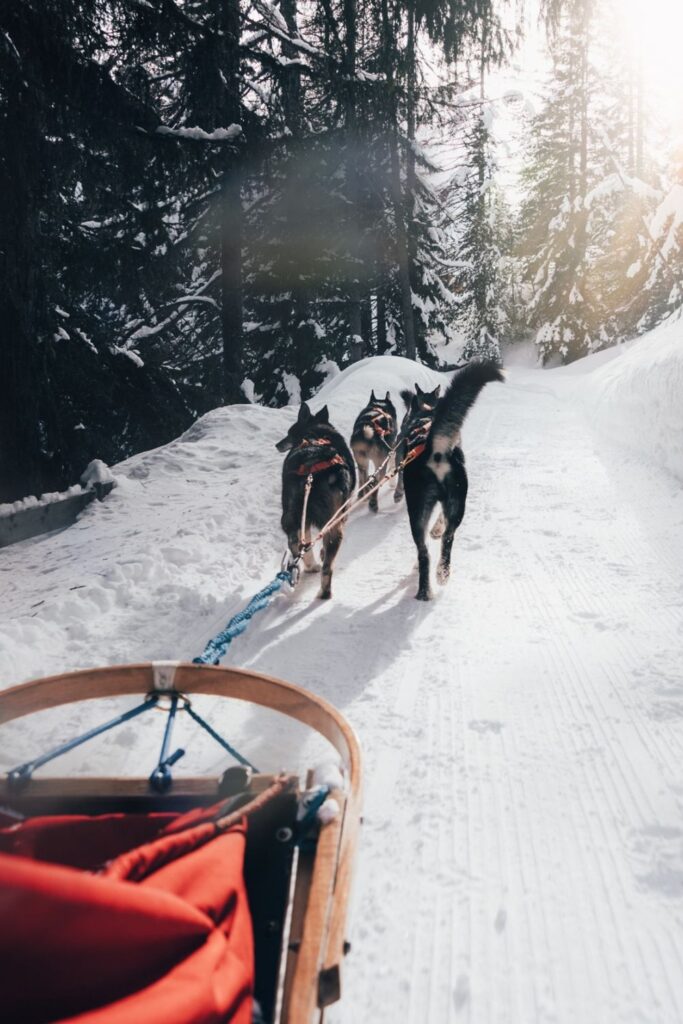
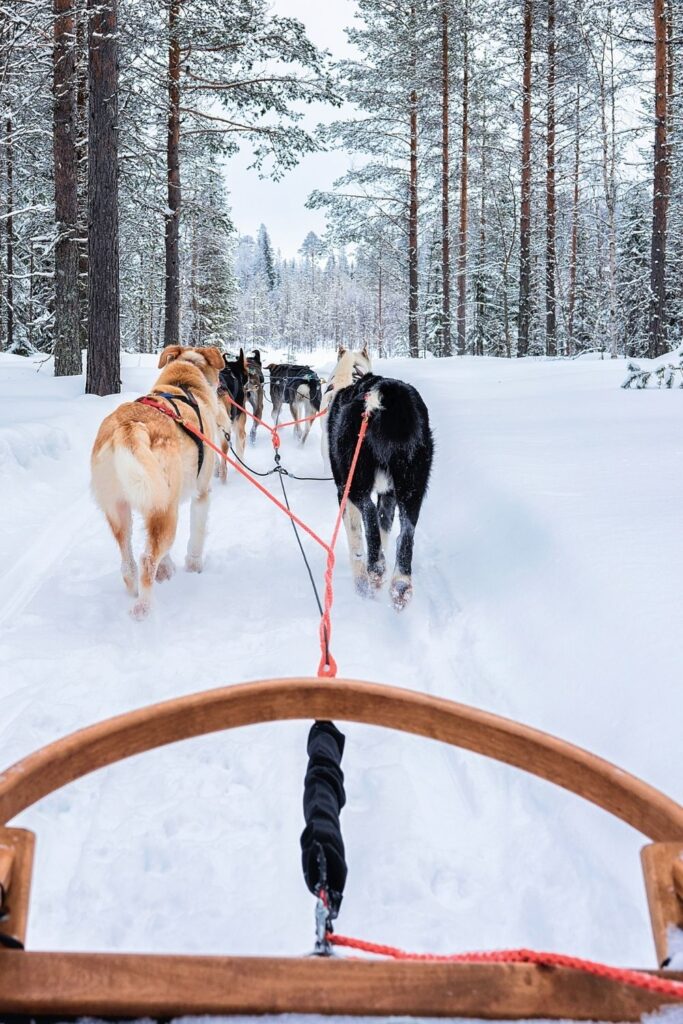
Dog sledding through snowy Swiss forests is hands-down one of the most fun and unique things to do in Switzerland in winter. Jura Escapades, located in the Jura mountains near Saignelégier, offers authentic dog sledding adventures that make you feel like you’re in the Arctic.
What Makes It Special: You’ll meet the enthusiastic husky team (they LOVE to run!), learn basic commands, and either ride as a passenger or learn to mush your own sled. The trails wind through pristine forests and across frozen meadows with panoramic views of the Jura mountains. The dogs’ pure joy and energy is infectious, and the silence of gliding through snow-covered woods broken only by the panting of happy huskies is magical.
How to Get There: Jura Escapades is based in Saignelégier in the Canton of Jura. Take a train to Saignelégier (about 2 hours from Bern or Basel), and the operators can often arrange pickup.
Costs:
Introductory ride (30-40 minutes): approximately 60-80 CHF per person
Half-day mushing experience: 150-200 CHF per person
Full-day adventure: 250-350 CHF per person
Multi-day expeditions: available upon request
Duration:
Short rides: 1-1.5 hours total
Half-day: 3-4 hours including training
Full-day: 6-7 hours with breaks
What’s Included: Most experiences include an introduction to the dogs, basic mushing training, warm beverages, and all necessary equipment.
Pro Tip: Dress very warmly, especially for your feet and hands! While the activity keeps you moving, temperatures in the Jura can be quite cold. Also, book well in advance as this is a popular activity with limited availability.
Sample Switzerland Winter Itineraries
7-Day Switzerland Winter Adventure
Here’s how to combine these magical destinations into one unforgettable week for your Switzerland winter itinerary:
Day
Destination
Activities
Where to Stay
Day 1
Arrive in Zurich → Interlaken
Travel day, settle in, evening stroll along Höheweg
Interlaken
Day 2
Lauterbrunnen & Grindelwald
Morning in Lauterbrunnen valley, afternoon in Grindelwald, explore villages
Grindelwald
Day 3
First Mountain Peak
Full day at First: Cliff Walk, sledding, mountain dining
Grindelwald
Day 4
Stoos Village & Fronalpstock
Funicular to Stoos, cable car to Fronalpstock, stay overnight at mountain hotel
Fronalpstock Hotel
Day 5
Zermatt
Travel to Zermatt (via Andermatt), explore village, photograph Matterhorn
Zermatt
Day 6
Zermatt (Gornergrat)
Gornergrat Railway, skiing or snow activities, evening fondue
Zermatt
Day 7
Glacier Express → Montreux
Scenic train to St. Moritz or Chur, evening at Chillon Castle
Montreux or departure
Budget Estimate: Approximately 2,000-3,500 CHF per person (excluding flights) depending on accommodation choices and activities.
5-Day Alternative Itinerary: Western Switzerland & Jura
Perfect if you want a more relaxed pace focusing on the French-speaking region:
Day
Destination
Activities
Where to Stay
Day 1
Arrive Geneva → Montreux
Visit Chillon Castle, evening in Montreux
Montreux
Day 2
Gruyères
Medieval city tour, castle visit, fondue lunch, cheese factory
Gruyères or return to Montreux
Day 3
Château-d’Oex
Hot air balloon flight (if during festival season) or village exploration
Château-d’Oex
Day 4
Jura Vaudois Nature Park
Cross-country skiing or snowshoeing, farm visit
Jura region
Day 5
Dog Sledding (Saignelégier)
Morning dog sledding experience, afternoon return to Geneva
Geneva or departure
Budget Estimate: Approximately 1,500-2,500 CHF per person (excluding flights) depending on balloon flight and accommodation.
Practical Tips for Your Switzerland Winter Trip
Best Time to Visit
December through March offers the best winter experience for your Switzerland winter itinerary. December brings Christmas markets and festive atmosphere, January and February have the most reliable snow conditions, and March offers longer days with still-excellent snow at high altitudes.
What to Pack
Essential Winter Clothing:
Insulated, waterproof winter coat
Thermal base layers (top and bottom)
Warm, waterproof boots with good traction
Winter gloves, hat, and scarf
Sunglasses (crucial for snow glare!)
Sunscreen (SPF 30+) for high-altitude sun exposure
Layering pieces (fleece or down jacket)
Other Essentials:
Swiss Travel Pass or Half Fare Card for transportation savings
Power adapter (Switzerland uses Type J plugs)
Reusable water bottle
Camera or phone with extra battery (cold drains batteries fast!)
Transportation
Switzerland has one of the world’s best public transportation systems, making it easy to explore Switzerland in winter. I highly recommend purchasing a Swiss Travel Pass (3, 4, 8, or 15 consecutive days) which includes:
Unlimited travel on trains, buses, and boats
Most mountain railways included or heavily discounted
Free museum entry throughout Switzerland
Public transportation in cities
Cost: 3-day pass starts around 250 CHF (2nd class), but pays for itself quickly if you’re traveling extensively.
Budget Considerations
Switzerland is expensive, but there are ways to manage costs for your winter trips:
Mid-range traveler: 200-350 CHF (comfortable hotels, restaurant meals, several activities)
Luxury traveler: 500+ CHF (top hotels, fine dining, premium experiences)
Money-Saving Tips:
Buy groceries at Coop or Migros for breakfast and lunch
Take advantage of free water fountains throughout Switzerland
Book mountain railways for early morning or late afternoon for better light AND sometimes lower prices
Stay in valley towns like Interlaken rather than mountain resorts
Use the Half Fare Card if you’re not traveling constantly
Conclusion: Your Swiss Winter Adventure Awaits
Switzerland in winter is truly a destination that exceeded all my expectations, and I return year after year to discover new corners of this winter wonderland. From paragliding over the snowy Alps to warming up with fondue in a medieval castle, from mushing your own dog sled team to watching hot air balloons drift over frozen peaks, every experience feels like something from a dream.
The beauty of planning a Switzerland winter itinerary is that you can mix adventure with relaxation, iconic destinations with hidden gems, and adrenaline-pumping activities with peaceful moments sipping hot chocolate while gazing at mountain views. Whether you follow my 7-day adventure itinerary, the more relaxed 5-day western route, or create your own combination of these 15 magical places, you’re guaranteed an unforgettable journey.
This comprehensive Switzerland travel guide covers everything you need to know about the best things to do in Switzerland in winter—from practical tips to specific costs and insider secrets. Start planning now, book those train tickets and mountain hotels, and get ready for the winter adventure of a lifetime. Switzerland is waiting to enchant you with its snow-covered peaks, charming villages, and experiences you’ll treasure forever.
Your Dream South of France Itinerary: 7 Days of Riviera Magic & Hidden Gems
This South of France itinerary takes you on a 7-day journey from the Italian border to lavender fields, combining iconic Riviera glamour with hidden natural...
My 10 Favorite Lakes in Switzerland: The Ultimate Travel Guide for Lake Lovers
The lakes in Switzerland are more than just beautiful—they're gateways to unforgettable adventures. Switzerland's lakes deliver experiences that last a lifetime. This guide reveals my...
The Most Romantic Christmas Getaways in the USA — Ultimate Guide
Save it on Pinterest Table of Contents (Affordable escapes, snowy ski towns, warm retreats & cozy Christmas markets) Where to Spend Christmas This Year? Every...