Table of Contents
When people ask me about the most beautiful lakes in Switzerland, I can barely contain my excitement. After spending countless seasons exploring this Alpine paradise, I’ve discovered that Switzerland’s lakes are more than just pretty postcards—they’re gateways to unforgettable adventures. Travel in Switzerland means immersing yourself in crystalline waters surrounded by snow-capped peaks, charming villages, and some of the most breathtaking scenery on Earth.
This Switzerland travel guide is born from my personal experiences hiking lakeside trails, taking spontaneous swims in mountain waters, and watching the sun paint the Beautiful Alps in shades of pink and gold reflected on mirror-like surfaces. Whether you’re planning your first Switzerland vacation or returning for another adventure, these ten lakes represent the very best of what this country offers. Ready to fall in love with the most beautiful lakes in Switzerland? Let’s dive in.
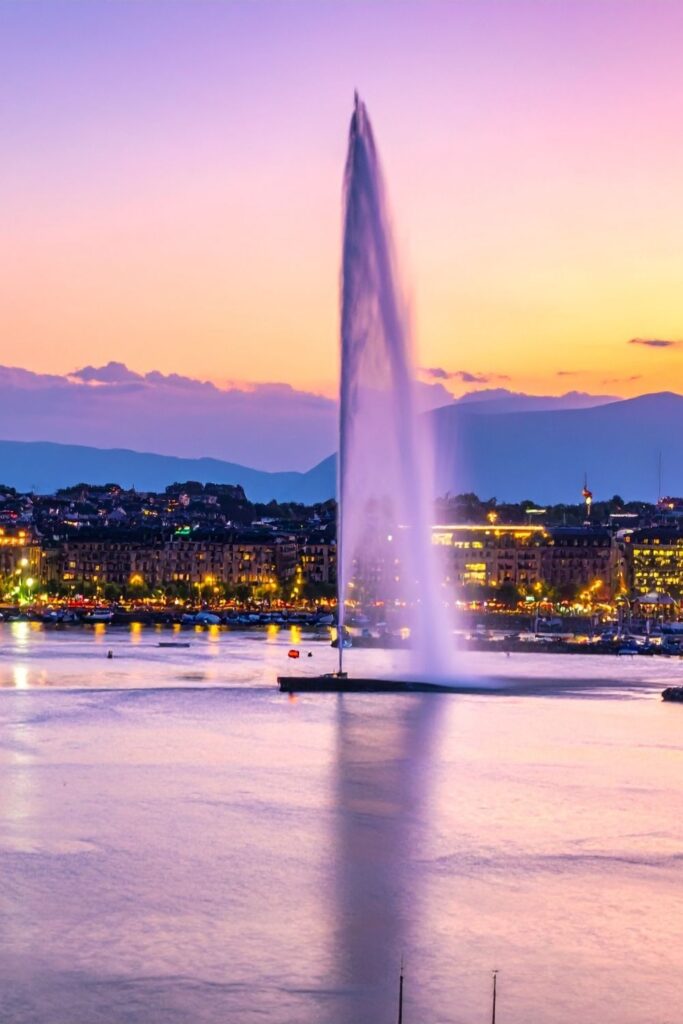
1. Lake Léman (Lake Geneva): Where French Elegance Meets Swiss Precision
Straddling the border between Switzerland and France, Lake Léman is the largest lake in the Alps and an absolute must for anyone looking to travel in Switzerland. I spent a magical week driving around its shores, discovering charming cities and medieval castles.
What Makes It Special
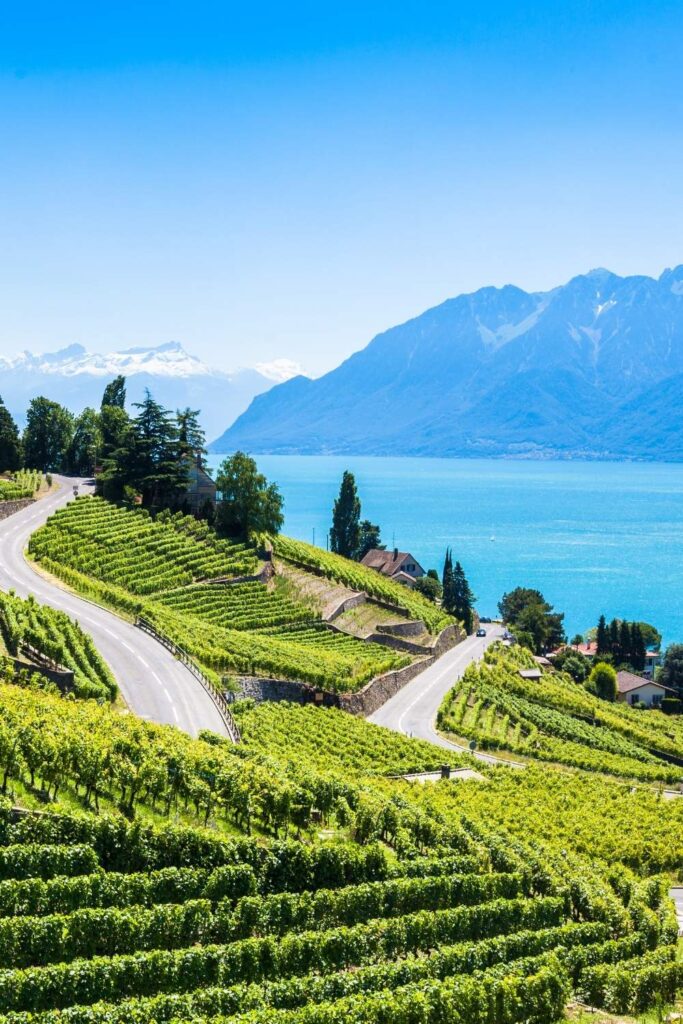
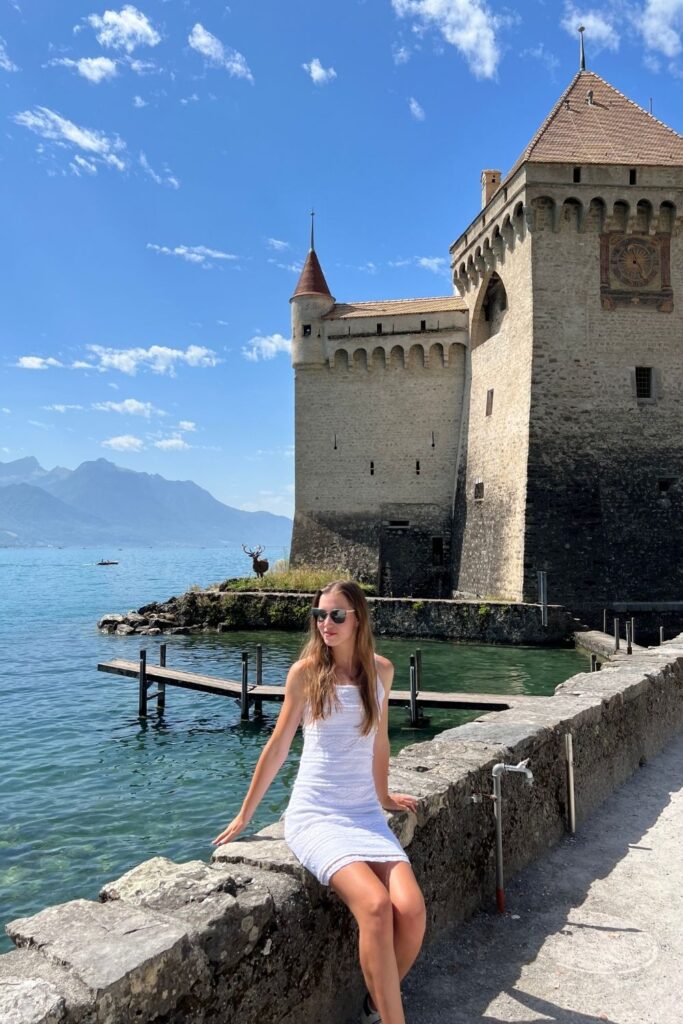
The French side of Switzerland comes alive around Lake Léman, where vineyards cascade down terraced hillsides and Belle Époque architecture lines elegant promenades. Montreux offers a stunning lakeside promenade with palm trees, while Lausanne combines Olympic heritage with vibrant student energy. Chillon Castle is the jewel in the crown—this medieval fortress sits on a rocky island, and exploring its dungeons and courtyards feels like stepping into a fairy tale.
How to Get There
Geneva International Airport provides easiest access, with trains every 10-15 minutes to Geneva city center (6 minutes). From Zurich, direct trains reach Lausanne in 2 hours 15 minutes and Montreux in 2 hours 45 minutes. Driving around the lake takes 3-4 hours without stops.
Hikes to Do
Lavaux Vineyards UNESCO Trail:
- Difficulty: Easy to moderate
- Time: 2-4 hours (various sections)
- Best for: Wine lovers, photographers, families
- Terraced vineyards between Lausanne and Montreux
- Wine tastings available along route
Rochers-de-Naye:
- Difficulty: Moderate (or take cogwheel train)
- Time: 3-4 hours hiking from Montreux
- Best for: Summit seekers, marmot watching
- Train option: 72 CHF round trip
- Spectacular 360-degree views
Activities to Do
- Chillon Castle: 13.50 CHF adults, 7 CHF children, audio guide included, allow 1.5-2 hours
- Lake Cruises: 1-hour cruises 24-36 CHF, full-day Belle Époque paddle steamer 45-70 CHF, covered by Swiss Travel Pass
- Swimming & Beaches: Free public beaches throughout (Lausanne-Ouchy, Montreux Plage, Geneva Bains des Pâquis), water temperature 23-25°C in summer
Pro Tip
Visit during September when weather stays gorgeous but summer crowds have dispersed. The Lavaux vineyards are stunning during harvest season with golden leaves contrasting against blue water.
2. Lake Thun: The Gateway to Alpine Adventures
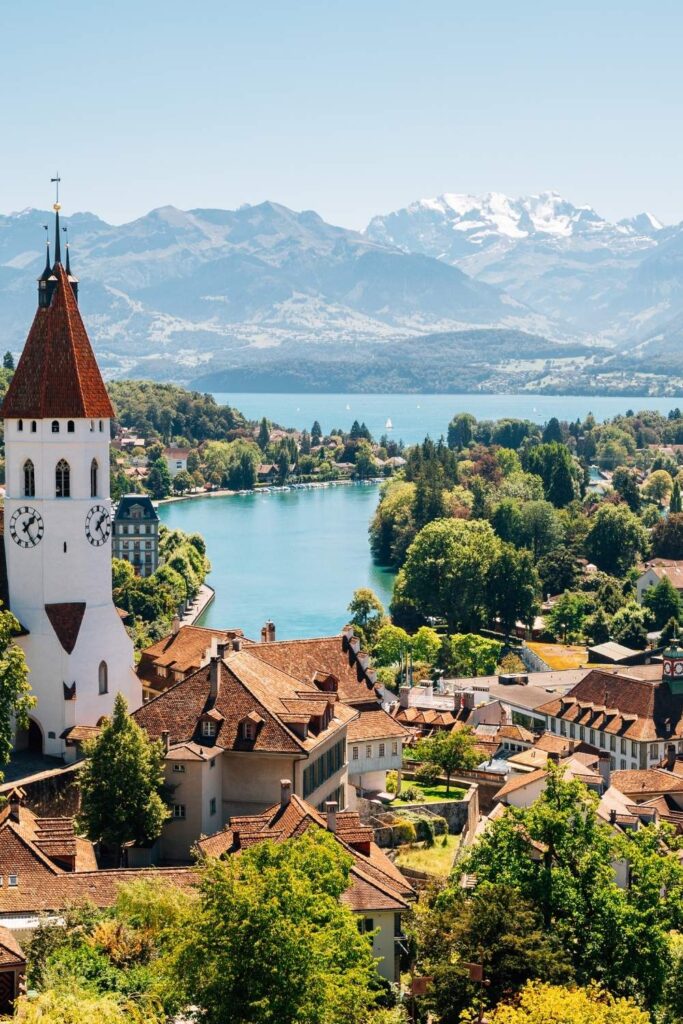
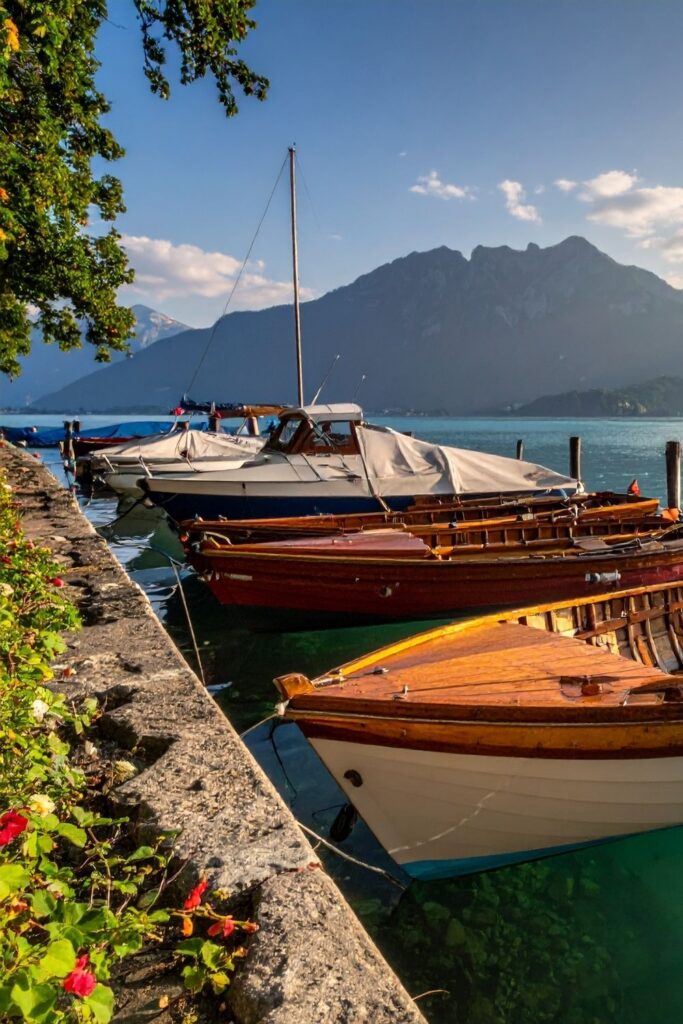
Lake Thun holds a special place in my heart as it perfectly balances accessibility with alpine drama. Positioned between charming Thun and adventure capital Interlaken, this lake serves as the perfect base for exploring Lauterbrunnen Switzerland’s famous valley.
What Makes It Special
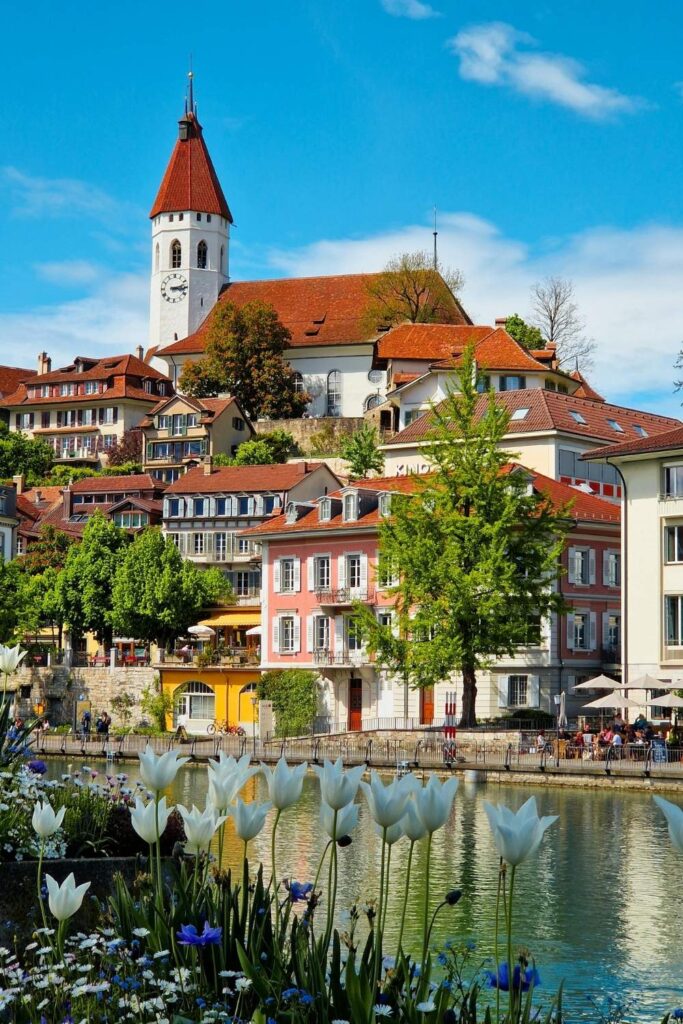
The lake’s turquoise-blue waters stretch 17.5 kilometers with the Beautiful Alps rising dramatically on the southern shore. The town of Thun itself is often overlooked but absolutely worth exploring—this medieval town with its elevated castle and covered bridges is a gem. The historic paddle steamers between Thun and Interlaken have operated since the 1800s, and gliding across the water while mountains loom larger is timeless.
How to Get There
Thun is incredibly well-connected by train, just 20 minutes from Bern and 25 minutes from Interlaken. From Zurich, direct trains take 1 hour 40 minutes. The train station is right in town center, about a 10 minutes walk to the lakeside.
Hikes to Do
Niederhorn Panorama Trail:
- Difficulty: Moderate
- Time: 2.5-3 hours one way
- Best for: Views enthusiasts, photographers
- Funicular from Beatenberg to Niederhorn: 60 CHF round trip
- Stunning 360-degree views of Lake Thun and peaks
Thun to Spiez Lakeside Walk:
- Difficulty: Easy
- Time: 3-4 hours
- Best for: Families, casual hikers
- Completely flat path with multiple beach access points
- Perfect with young children
Activities to Do
- Thun Castle: 10 CHF adults, 4 CHF children, historical museum with tower views over town and lake
- Lake Activities: Boat tour Thun to Interlaken 29 CHF, SUP rental 25-35 CHF/hour, kayak rental 20-30 CHF/hour, free swimming beaches
- St. Beatus Caves: 20 CHF adults, 12 CHF children, spectacular limestone caves with underground waterfalls, 1km illuminated walkway
Pro Tip
Skip expensive Interlaken restaurants and eat in Thun instead—quality is better and prices are 30-40% lower. Thursday market in old town is fantastic for local cheese and prepared foods.
3. Lake Brienz: The Turquoise Jewel of the Bernese Oberland
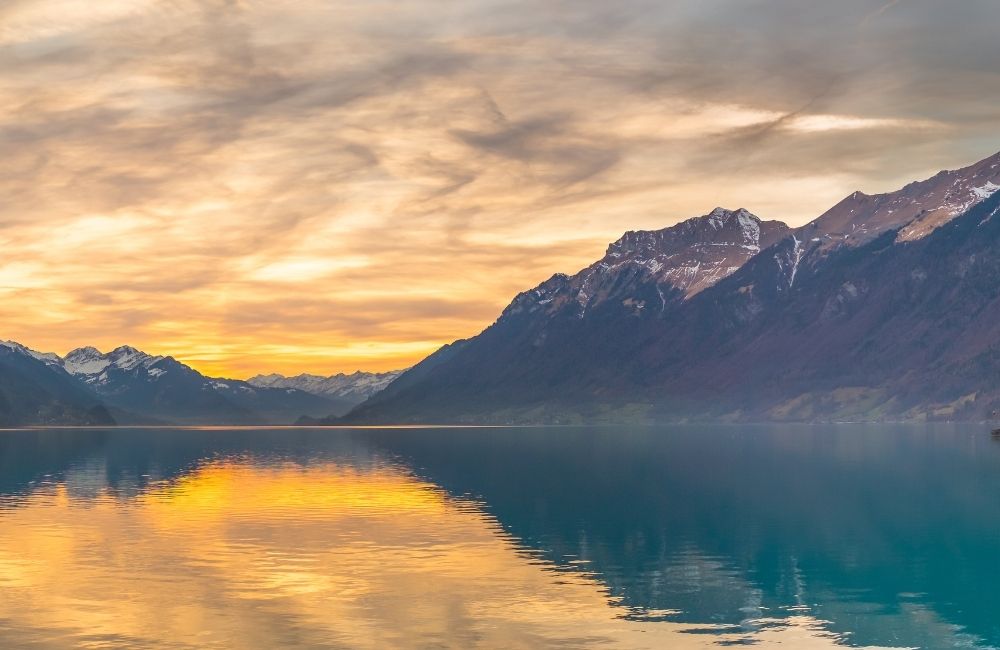
Lake Brienz has an almost unreal shade of turquoise-blue, created by glacial sediment that refracts light magically. The town’s main street—Brunngasse—was named one of the most beautiful streets in Europe, and I have to agree.
What Makes It Special
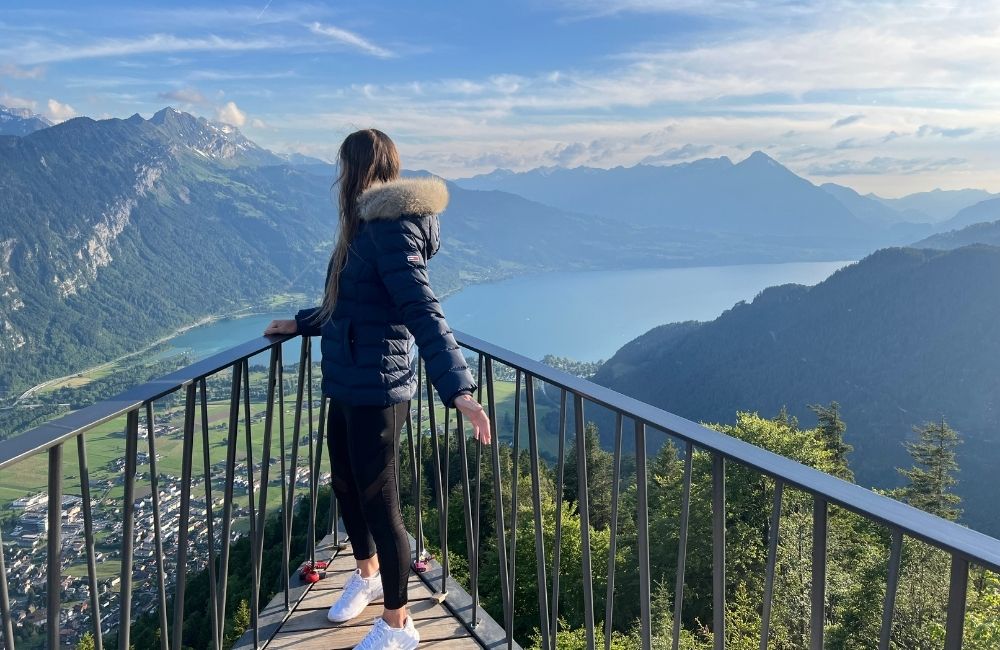
The lakeside promenade from Brienz town features playgrounds, outdoor fitness equipment, and interactive installations stretching several kilometers. In summer, locals and tourists sprawl on grass, swimming and barbecuing with the most beautiful lakes in Switzerland as backdrop. The Harder Kulm viewpoint above Interlaken provides spectacular views over both Lake Brienz and Lake Thun simultaneously.
How to Get There
Trains from Interlaken Ost to Brienz run every 30 minutes and take just 20 minutes. From Lucerne, the scenic train along the lake takes 1 hour 15 minutes. The Brienzer Rothorn steam railway climbs from Brienz to 2,350 meters (98 CHF round trip).
Hikes to Do
Harder Kulm Panorama Trail:
- Difficulty: Moderate
- Time: 1.5-2 hours descent
- Best for: Viewpoint lovers, sunset seekers
- Funicular from Interlaken: 32 CHF round trip
- Views over both lakes and Jungfrau massif
Brienz to Giessbach Falls:
- Difficulty: Easy to moderate
- Time: 2 hours one way
- Best for: Nature lovers, families with older children
- Lakeside trail to 14-cascade waterfall
- Return by boat: 15 CHF
Activities to Do
- Ballenberg Open-Air Museum: 32 CHF adults, 16 CHF children, over 100 historic Swiss buildings, traditional craft demonstrations, allow 3-5 hours
- Giessbach Falls: Free to visit falls, historic funicular 8 CHF round trip, Belle Époque hotel with terrace café, boat from Brienz 15 CHF
- Brunngasse Street: Free to wander charming traditional houses with flower boxes, multiple small cafés and shops
Pro Tip
The best light for photographing Lake Brienz’s turquoise color is mid-morning to early afternoon. Visit on weekdays if possible—weekends bring Interlaken crowds.
4. Lake Lucerne: Where Alpine Drama Meets Swiss History
Lake Lucerne might just be the most beautiful lake in Switzerland. This complex, fjord-like lake with dramatic mountain backdrop has inspired travelers since Mark Twain’s days, and deserves 2-3 days of any travel itinerary.
What Makes It Special
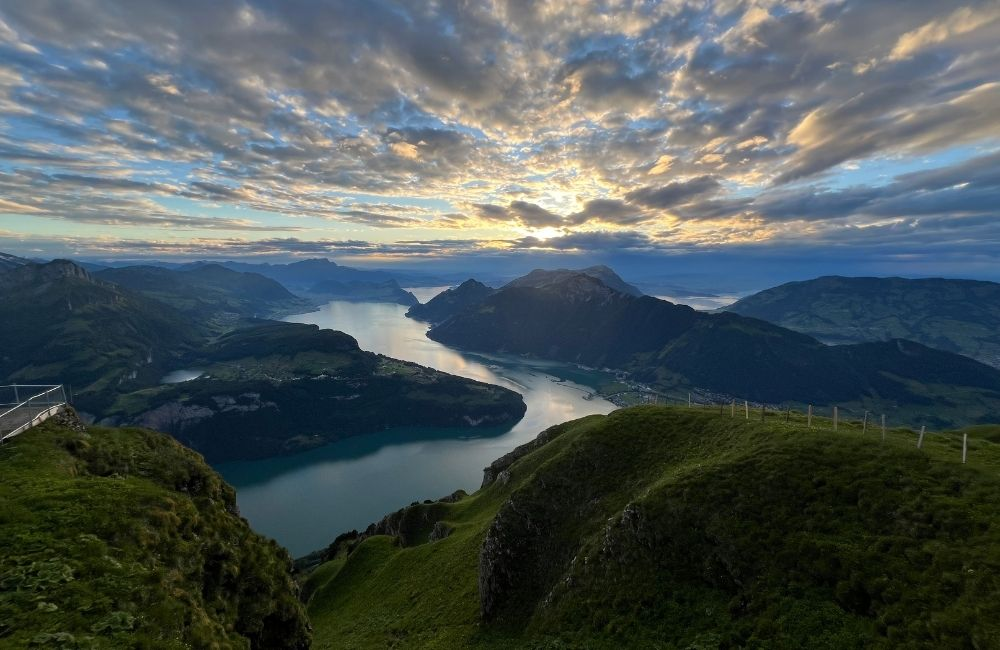
Lake Lucerne twists through four different cantons, creating constantly changing perspectives. My favorite experience was staying at Fronalpstock Hotel at 1,922 meters, offering panoramic vistas that made me gasp each morning. Getting there via the world’s steepest funicular (110% gradient!) to car-free Stoos village, then chairlift to the hotel, is an adventure that keeps crowds away—perfect for authenticity seekers.
How to Get There
Lucerne is a major rail hub, just 45 minutes from Zurich by train. For Fronalpstock: train from Lucerne to Schwyz (30 minutes), bus to Schlattli (15 minutes), Stoosbahn funicular (4 minutes), chairlift to Fronalpstock (10 minutes). Total journey: 1.5 hours.
Hikes to Do
Fronalpstock Ridge Trail:
- Difficulty: Easy to moderate
- Time: 1-2 hours loop
- Best for: Photographers, families, hotel guests
- 360-degree mountain panoramas from hotel
- Suitable for children 6+
Rigi Panorama Trail:
- Difficulty: Easy
- Time: 1.5 hours
- Best for: Everyone—classic Swiss experience
- Rigi Kulm to Rigi Kaltbad route
- Stunning lake views throughout
Activities to Do
- Fronalpstock Hotel: Check availability and prices for Fronalpstock Hotel, doubles 200-300 CHF including breakfast, book months ahead for summer weekends, restaurant open to non-guests
- Mount Rigi: Cogwheel railway 72 CHF round trip from Vitznau, multiple summit restaurants, sunrise trips available
- Lake Cruises: Short trips 14-32 CHF, full lake day pass 68 CHF, vintage paddle steamers, dinner cruises available
Pro Tip
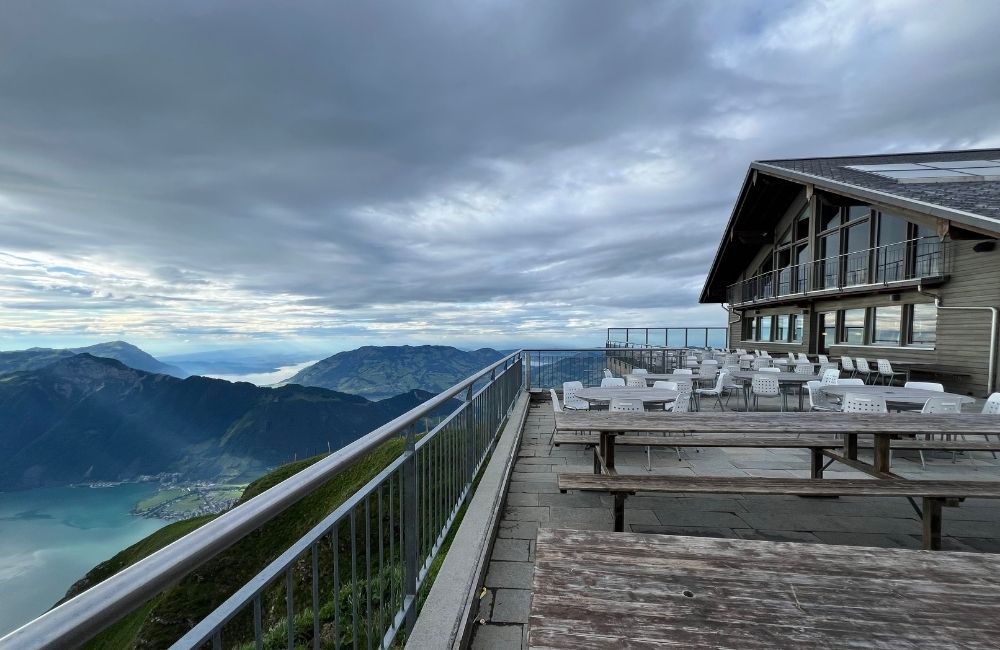
Fronalpstock books quickly—reserve 3-6 months ahead for weekends. Even without staying, the restaurant terrace with coffee and cake (15 CHF) is worth the journey on clear days.
5. Seealpsee: My Favorite Hidden Alpine Gem
Of all the most beautiful lakes in Switzerland, Seealpsee holds the most special place in my heart. This small alpine lake in Appenzell represents everything I love about Switzerland travel—dramatic scenery, peaceful surroundings, and authentic Swiss culture.
What Makes It Special
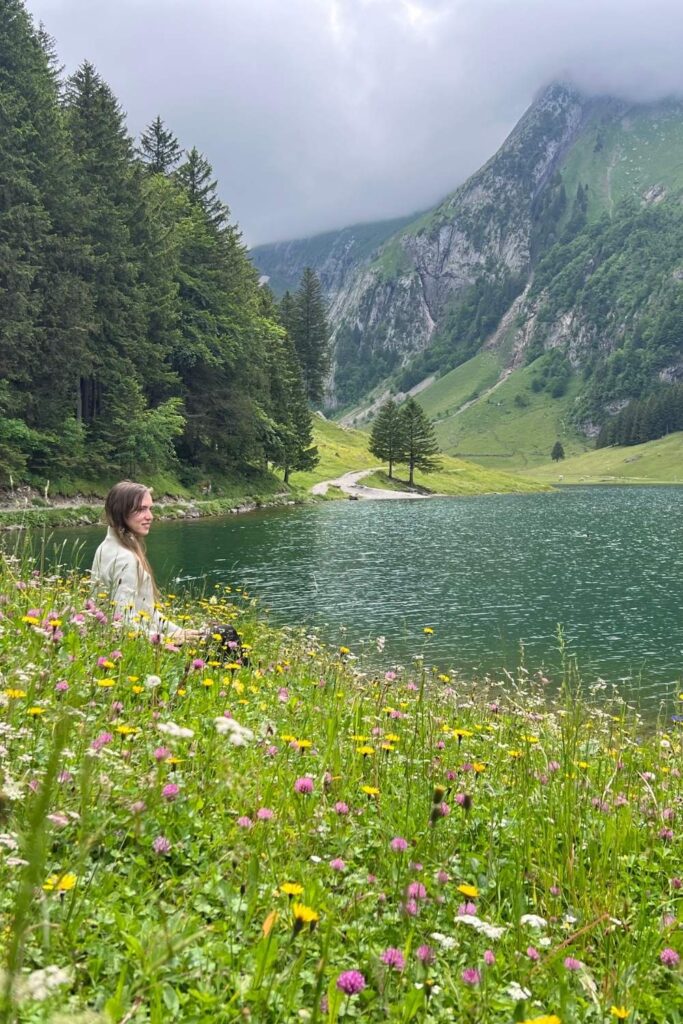
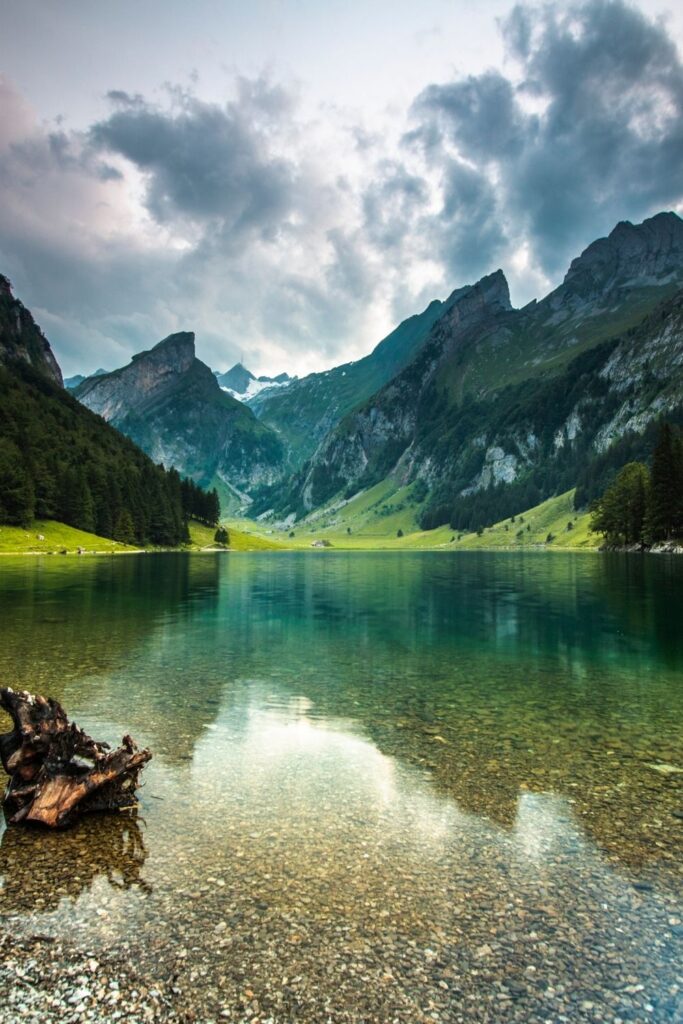
Seealpsee sits at 1,143 meters in a stunning cirque surrounded by the dramatic Alpstein massif. On certain days, local musicians play alphorn at the lake—those enormous wooden instruments creating sounds that resonate through the valley. Combined with tinkling cowbells, waterfalls cascading down cliffs, and the pristine turquoise lake, this created one of my most treasured Switzerland vacation memories.
How to Get There
From Zurich, take the train to Wasserauen (2 hours with one change in Gossau). From the station, it’s a 1.5-hour uphill hike to the lake—no cable car shortcut, which keeps crowds manageable. The trail gains 350 meters elevation, suitable for moderate fitness.
Hikes to Do
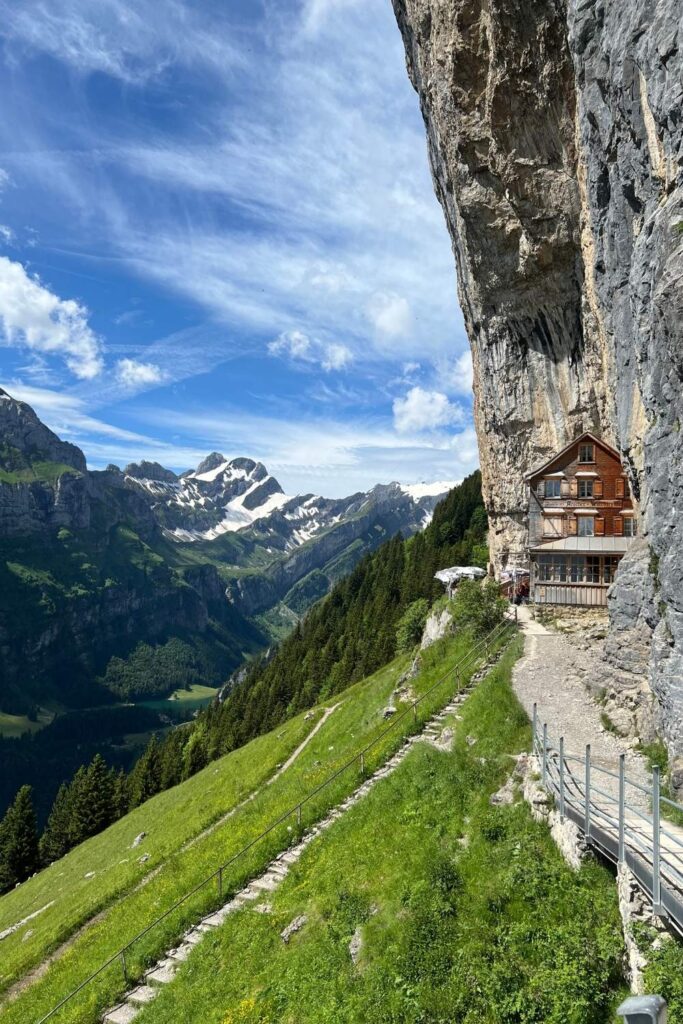
Seealpsee to Aescher-Wildkirchli:
- Difficulty: Challenging
- Time: 2-2.5 hours one way
- Best for: Experienced hikers
- Steep climb to famous cliff-face restaurant
- Some exposed sections with cables
- Not suitable for young children
Wasserauen to Ebenalp to Seealpsee:
- Difficulty: Moderate
- Time: 2 hours
- Best for: Those wanting cable car option
- Cable car Wasserauen to Ebenalp: 30 CHF round trip
- Hike down via Aescher to lake
Activities to Do
- Mountain Restaurant Seealpsee: Traditional Swiss dishes 18-28 CHF, excellent rösti and alpine macaroni, basic accommodation 110-130 CHF per person half-board, cash preferred
- Alphorn Demonstrations: Check Appenzell Tourism for schedule, typically Thursday afternoons in summer, free to watch
- Swimming: Free but very cold water (12-16°C), most refreshing after long hike, June-August only
Pro Tip
Visit early morning (arrive by 8-9 AM) when mist hangs over water and you’ll have the lake nearly to yourself. Bring cash as card machines sometimes fail.
6. Lake Maggiore: Switzerland’s Mediterranean Secret
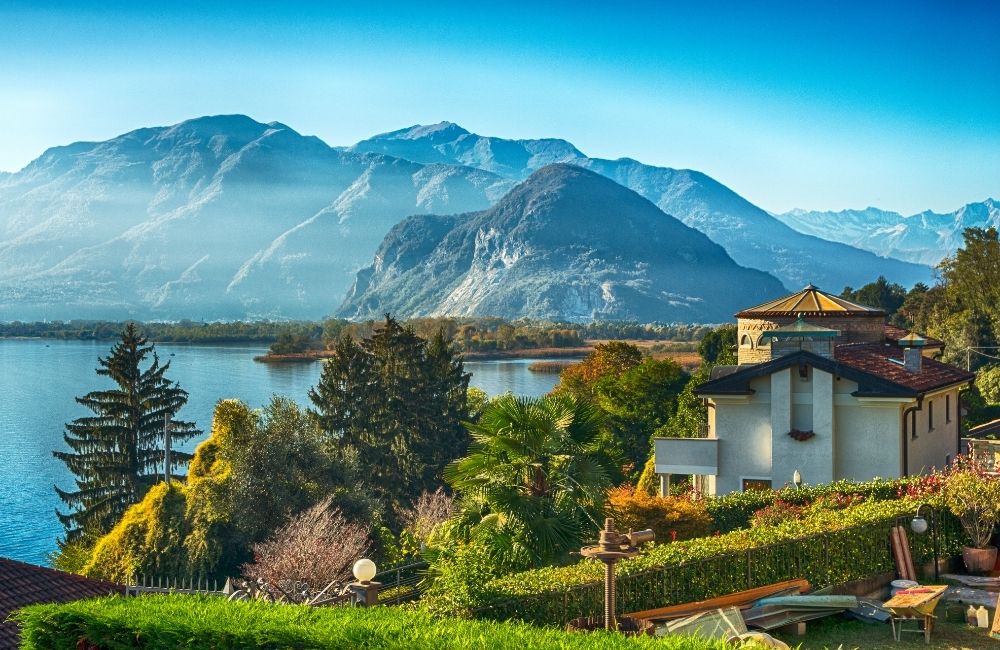
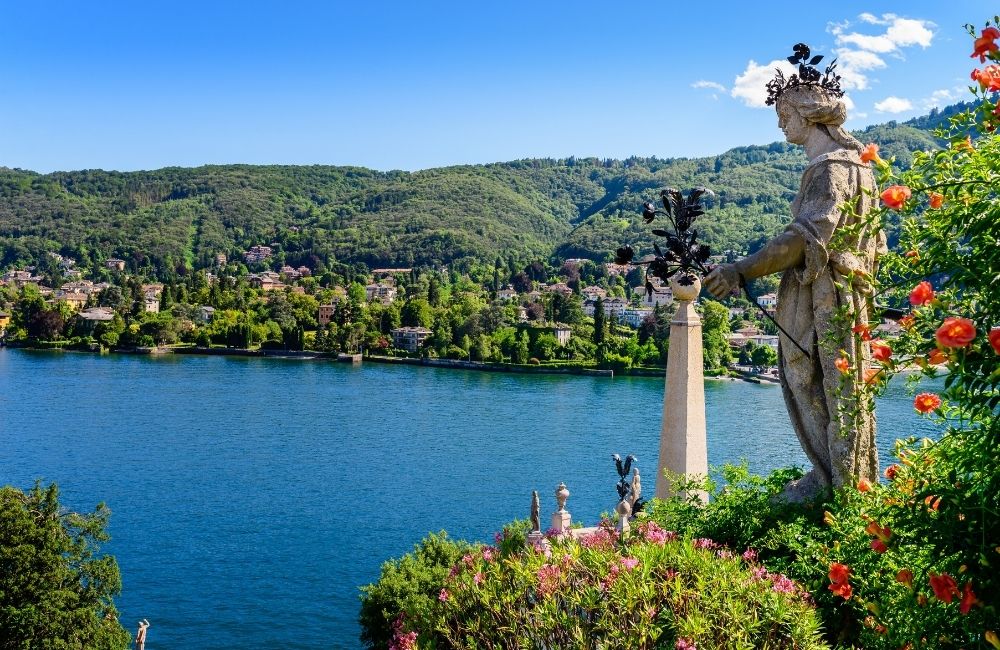
Lake Maggiore sits in Ticino, Switzerland’s Italian-speaking canton, bringing Mediterranean flair and summer vibes. This is where locals escape for sunshine, palm trees, and a completely different pace of life.
What Makes It Special
The Swiss side offers the best of both worlds—Swiss efficiency with Italian passion and cuisine. The climate is dramatically different from the rest of Switzerland, with mild winters and vegetation including palm trees and citrus groves. Lake Maggiore is Switzerland’s warmest lake, perfect for water sports April through October—water reaches 24-26°C in summer.
How to Get There
Trains from Zurich to Locarno take 3 hours via the spectacular Gotthard route. From Lucerne, 2 hours 15 minutes. Driving from Zurich takes about 2.5 hours. Parking in Locarno and Ascona: 2-4 CHF per hour.
Hikes to Do
Cardada-Cimetta Panorama Trail:
- Difficulty: Easy to moderate
- Time: 1 hour
- Best for: Lake views without intense effort
- Funicular from Locarno: 23 CHF round trip
- Observation platform with stunning views
Valle Verzasca:
- Difficulty: Various options
- Time: 2-6 hours depending on route
- Best for: Canyon scenery enthusiasts
- Famous emerald-green swimming pools
- 30-minute drive from Locarno
Activities to Do
- Water Sports: SUP rental 25-35 CHF/hour, kayak 20-30 CHF/hour, wakeboarding 40-60 CHF/session, boat rental from 100 CHF/half day
- Brissago Islands: Boat trip 10-15 CHF from Locarno, botanical garden admission 11 CHF adults, subtropical plants from five continents
- Locarno Film Festival: August annually, Piazza Grande outdoor screenings, tickets 15-25 CHF, book accommodation months ahead
Pro Tip
Visit shoulder seasons (May-June, September-October) for the best balance of good weather without extreme heat. This region is significantly cheaper than Bernese Oberland resorts.
7. Bachalpsee: The Mountain Lake That Broke Instagram
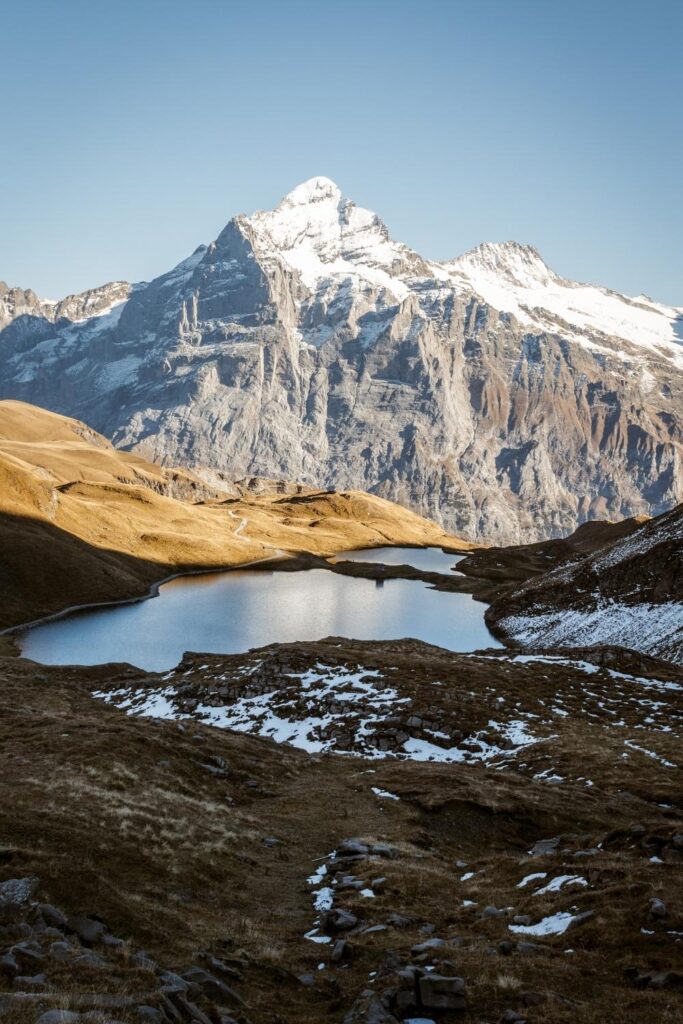
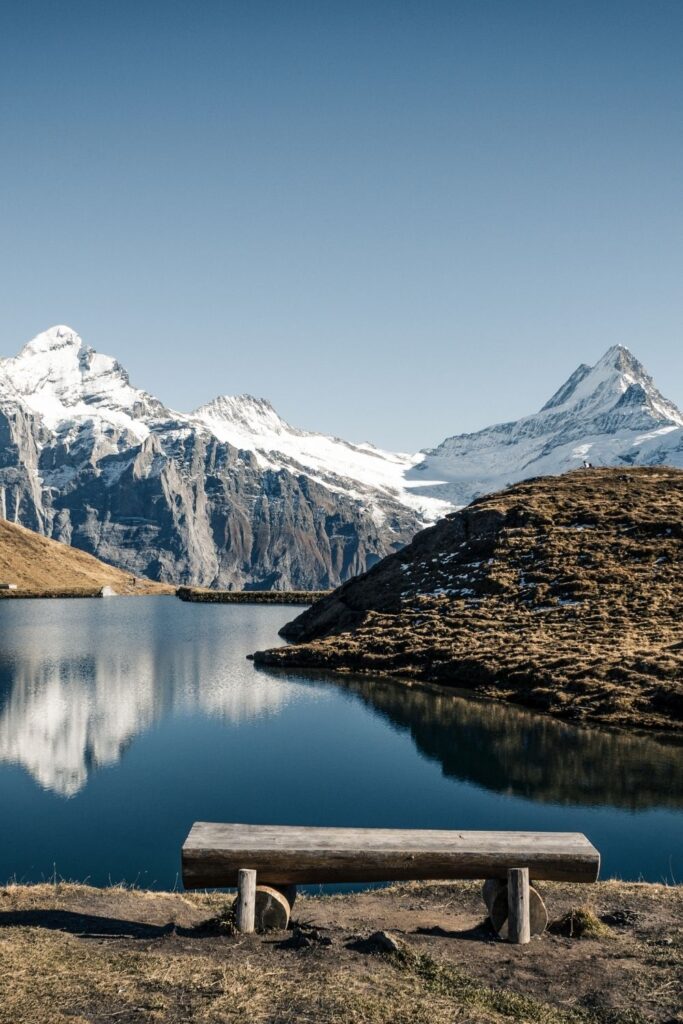
If you’ve researched the most beautiful lakes in Switzerland on Instagram, you’ve definitely seen Bachalpsee. This high alpine lake at 2,265 meters creates perfect mirror reflections of surrounding peaks on calm mornings—and yes, it lives up to the hype.
What Makes It Special
Bachalpsee is several small connected pools in a high alpine meadow, accessible via one of the easiest mountain hikes in the region. What makes it particularly appealing is accessibility—just 50 minutes of easy walking from Grindelwald First gondola station. Families with children, older adults, and those with limited hiking experience can access genuine alpine beauty without significant physical demands.
How to Get There
From Interlaken, train to Grindelwald (35 minutes). Grindelwald First gondola station is 10-minute walk from train station or accessible via free shuttle. Gondola to First takes 25 minutes, costs 68 CHF round trip (free with Swiss Travel Pass).
Hikes to Do
First to Bachalpsee:
- Difficulty: Easy
- Time: 50 minutes one way
- Best for: Everyone—most accessible alpine hike
- Well-maintained, wide trail
- Suitable for children 5+, older adults
Bachalpsee to Faulhorn:
- Difficulty: Moderate
- Time: 1.5 hours from Bachalpsee
- Best for: Those wanting to extend hike
- Beautiful ridge walking to historic mountain hotel
- Suitable for teens and fit adults
Activities to Do
- First Flyer (Zip Line): 59 CHF, 800-meter zip line at speeds up to 84 km/h, age 10+, thrilling descent
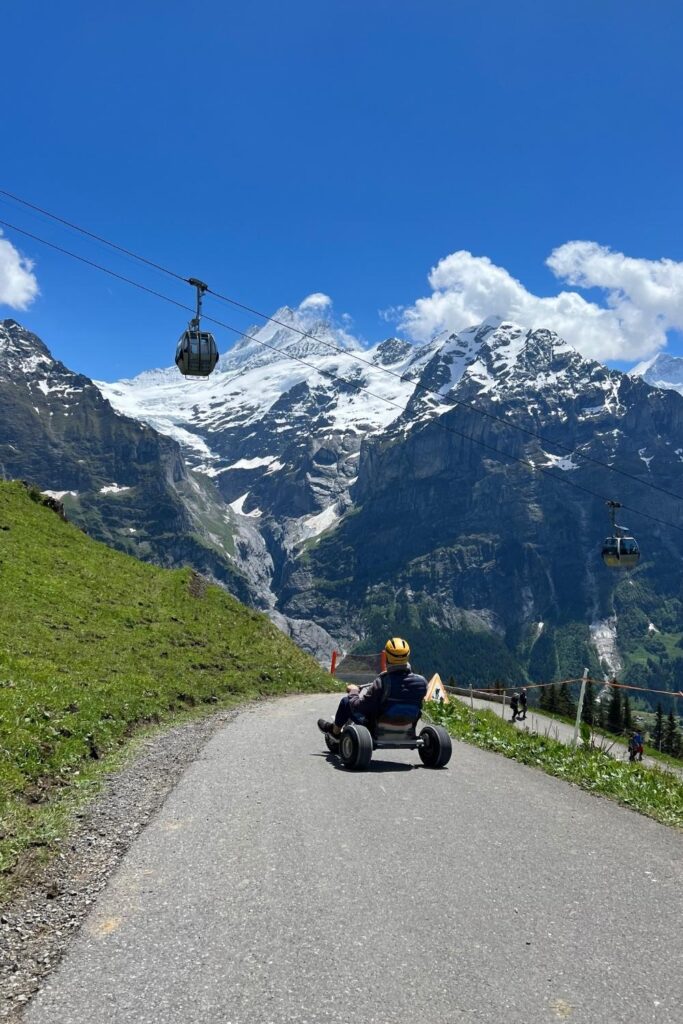
- Mountain Cart Descent: 19 CHF cart rental, scooter-like carts for descending mountain paths, 30-40 minutes First to Bort, age 8+
- First Cliff Walk: 30-45 minutes loop, suspension bridge and walkway, spectacular views, free with gondola ticket
Pro Tip
Book sunrise special departures for photography or avoiding crowds (regular crowds arrive 10 AM-3 PM). Weather changes rapidly—bring layers even if it is warm in the valley.
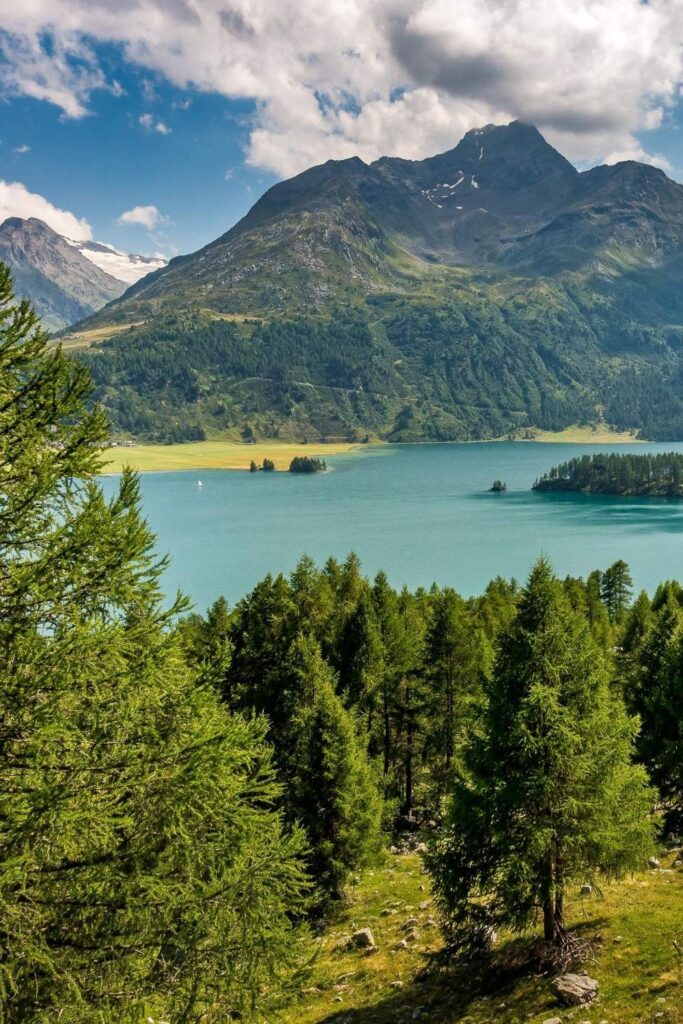
8. Lake Sils: Autumn’s Golden Paradise
Lake Sils in the Engadin valley showcases why autumn might be the most magical season for traveling in Switzerland. This elegant lake has attracted artists and philosophers for centuries—Nietzsche spent seven summers here.
What Makes It Special
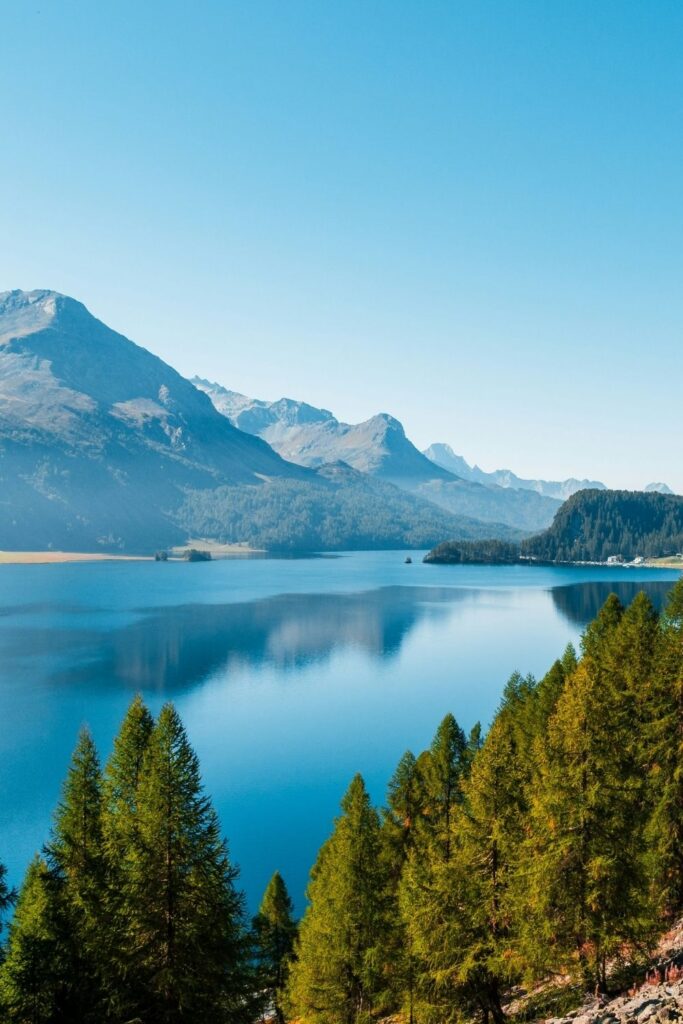
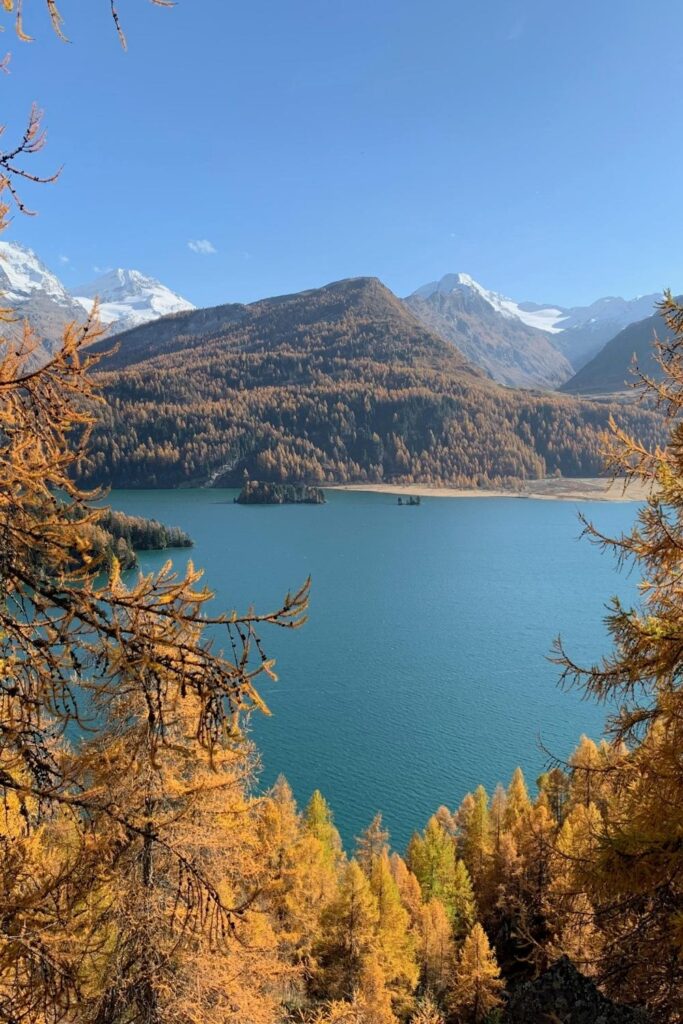
Lake Sils sits at 1,797 meters in Upper Engadin, creating an exceptionally clear atmosphere and intense light. In autumn, larch forests turn brilliant gold, creating contrasts with deep blue lake and snow-dusted peaks that feel almost painterly. The villages maintain elegant tranquility with traditional Engadin architecture featuring thick stone walls and ornate sgraffito decoration.
How to Get There
From Zurich, train to Chur (1.5 hours), then Bernina Express route to Sils-Maria (2 hours). Total journey: 3.5 hours through spectacular scenery. From St. Moritz, just 20 minutes by bus (Line 1 or 2).
Hikes to Do
Lake Sils Shoreline Walk:
- Difficulty: Easy
- Time: 1.5-2 hours
- Best for: Everyone seeking peaceful lakeside walking
- Flat path with multiple beach access points
- Stunning mountain reflections
Fex Valley Walk:
- Difficulty: Easy to moderate
- Time: 2-4 hours depending on distance
- Best for: Authentic alpine valley experience
- Car-free valley with traditional hay barns
- Horse-drawn carriage return available: 35 CHF
Activities to Do
- Windsurfing & Kitesurfing: Perfect afternoon Maloja wind, equipment rental 45-80 CHF/day, lessons 120-180 CHF, best July-September
- Segantini Museum (St. Moritz): 12 CHF adults, dedicated to artist Giovanni Segantini, beautiful location, allow 1-1.5 hours
- Village Exploration: Sils-Maria, Silvaplana, Maloja each have distinct character, traditional Engadin architecture, excellent bakeries
Pro Tip
Visit late September to early October for peak autumn color—golden larches are unforgettable. Hotel prices drop 30-50% compared to summer for excellent value.
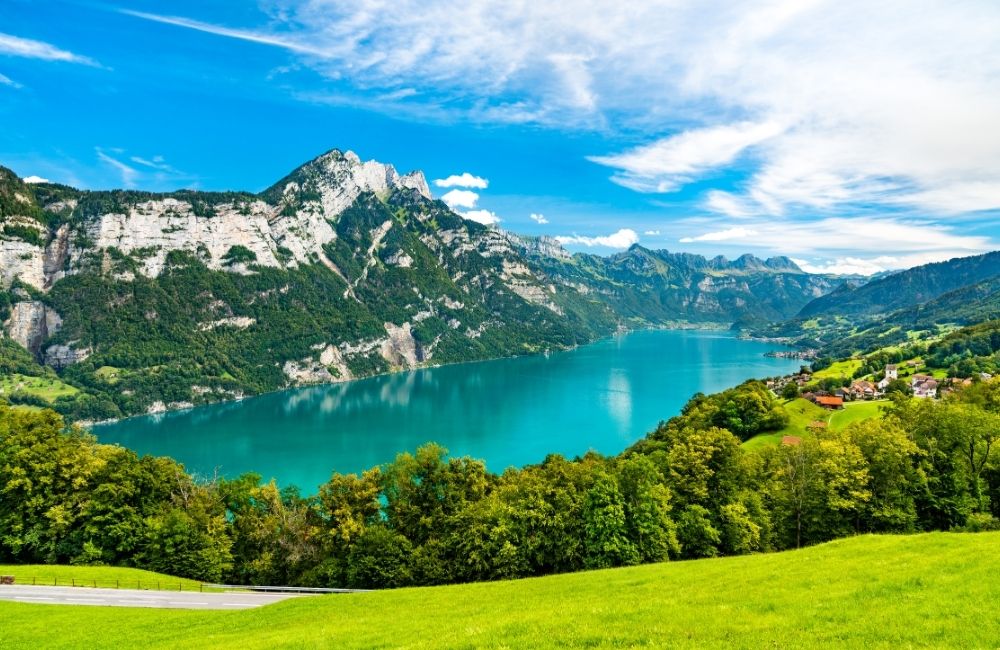
9. Walensee: The Dramatic Fjord of Eastern Switzerland
Walensee often gets overlooked in favor of more famous lakes, rewarding eastern travelers with dramatic scenery and far fewer crowds. This narrow lake creates Switzerland’s most fjord-like landscape with cliffs plunging directly into water.
What Makes It Special
The Churfirsten mountain range rises almost vertically from the southern shore, creating walls of rock over 1,000 meters high. The Seerenbach Falls cascade in multiple tiers down these cliffs, and from certain vantage points you can see them tumbling with the entire Walensee spread below—a unique combination of waterfall and lake views among the most beautiful lakes in Switzerland.
How to Get There
Walensee sits between Zurich and Chur. Trains run along the northern shore with stops at Walenstadt and Murg (1 hour from Zurich, 45 minutes from Chur). For Seerenbach Falls viewpoint: train to Weesen, then steep 1.5-hour uphill hike.
Hikes to Do
Seerenbach Falls Trail:
- Difficulty: Moderate to challenging
- Time: 3-4 hours round trip from Weesen
- Best for: Waterfall lovers, dramatic views
- Three-tiered waterfall totaling 585 meters
- Best after rain for maximum water flow
Quinten Village Walk:
- Difficulty: Easy to moderate
- Time: 2.5 hours one way from Walenstadt
- Best for: Off-the-beaten-path experience
- Car-free lakeside village with microclimate
- Return by boat: 12 CHF
Activities to Do
- Boat Cruises: Regular service Walenstadt to Quinten, short cruises 12-18 CHF, full lake trips 28 CHF
- Swimming: Multiple free beaches along northern shore, Walenstadtberg has nicest facilities, water 20-23°C summer, uncrowded
- Chäserrugg Summit: Cable car from Unterwasser 44 CHF round trip, seven lakes visible from summit on clear days, modern summit restaurant
Pro Tip
Seerenbach Falls is the most spectacular late spring (May-June) when snowmelt peaks. Pack picnic rather than relying on restaurants—options limited along the lake.
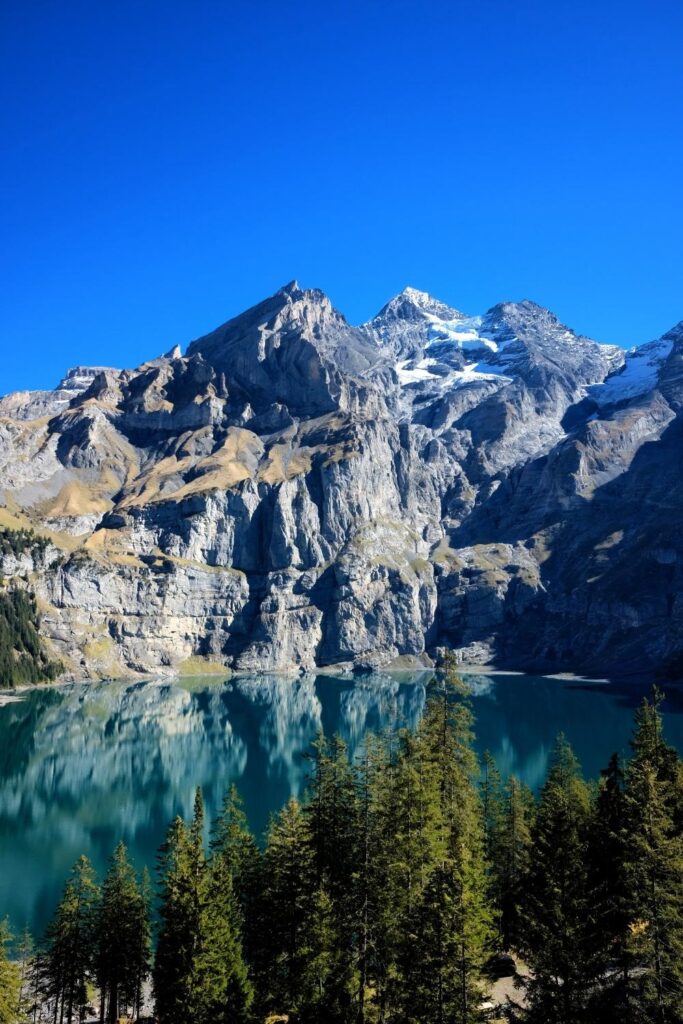
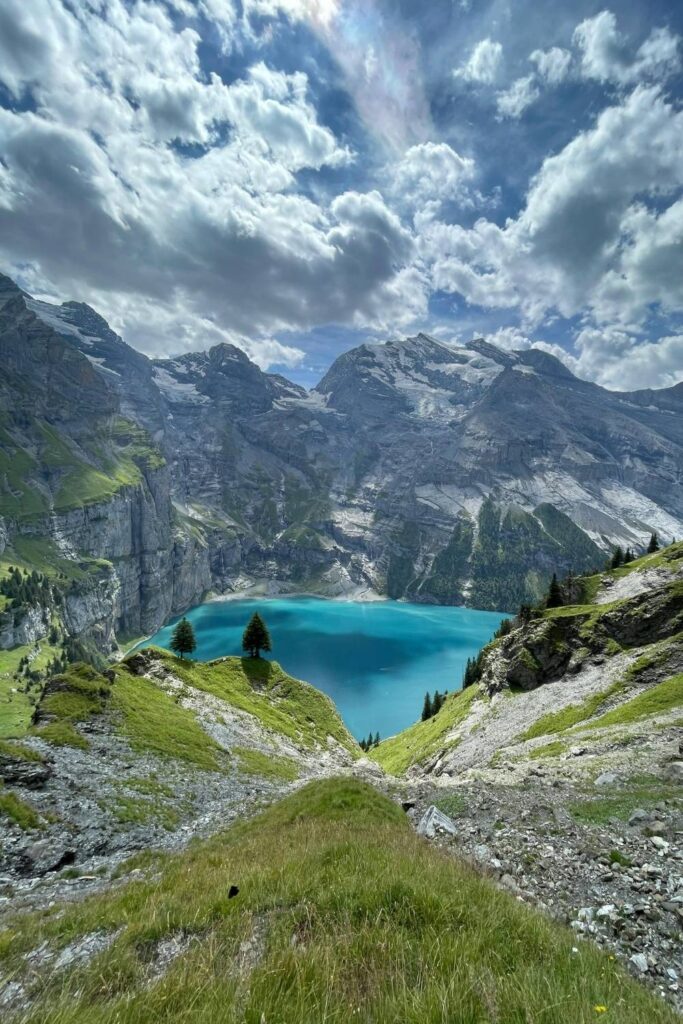
10. Oeschinen Lake: The Postcard-Perfect Alpine Jewel
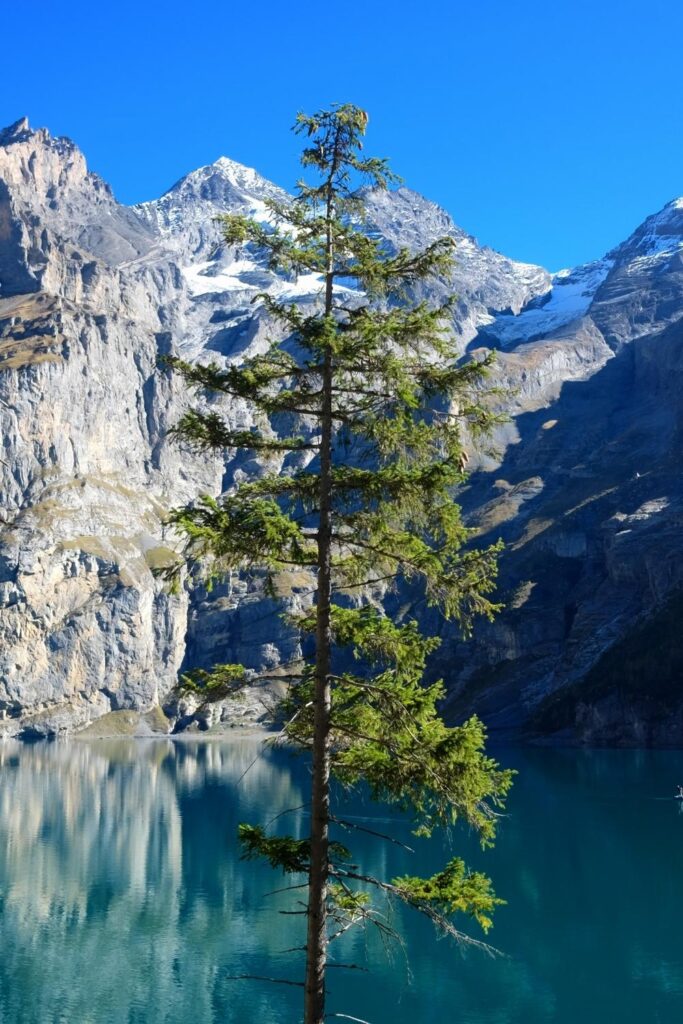
Oeschinen Lake is a UNESCO World Heritage site and might be the crown jewel of the most beautiful lakes in Switzerland. The dramatic cirque of peaks surrounding this turquoise alpine lake creates scenery so perfect it looks computer-generated.
What Makes It Special
Oeschinen sits at 1,578 meters in a spectacular mountain amphitheater near Kandersteg. Waterfalls cascade down surrounding cliffs, the Blüemlisalp massif provides stunning backdrop, and the lake’s color shifts from deep blue to turquoise. What elevates it beyond just another pretty alpine lake is the combination of accessibility (gondola plus 25-minute walk) and activities—swimming, paddleboating, serious alpine hiking, and in winter, Europe’s longest toboggan run.
How to Get There
From Interlaken, trains to Kandersteg take 45 minutes. From Kandersteg station, a 15-minute walk to the gondola base. The Gondola to Oeschinen takes 7 minutes, costs 34 CHF round trip (covered by Swiss Travel Pass). From the gondola top, an easy 25-minute walk (mostly downhill) to the lake.
Hikes to Do
Oeschinen Lake Circuit:
- Difficulty: Easy to moderate
- Time: 1.5-2 hours
- Best for: Everyone wanting different perspectives
- Mostly flat path around entire lake
- Suitable for families with children 6+
Heuberg Summit Trail:
- Difficulty: Moderate to challenging
- Time: 2.5-3 hours from lake
- Best for: Hikers wanting elevated perspectives
- 600-meter climb to 2,177-meter summit
- Spectacular views over lake and peaks
Activities to Do
- Swimming: Free (just access cost), water 15-18°C peak summer, wooden platforms, shallow areas for children, lifeguard on duty
- Rowboat & Paddleboat Rentals: Rowboat 18 CHF/hour, paddleboat 25 CHF/hour, June-September, best way to appreciate lake
- Mountain Restaurant: Traditional Swiss cuisine 16-30 CHF, excellent terrace, overnight accommodation 85-140 CHF per person half-board, check availability and prices for Oeschinensee restaurant
Pro Tip
The lake is incredibly crowded between 11 AM-4 PM on summer weekends. Arrive first gondola (7:30-8 AM) or come late afternoon. Mountain restaurants are usually booked months ahead for overnight stays— so reserve early for a prime sunrise wake-up.
Sample 7-Day Switzerland Lakes Itinerary
Day | Destination | Activities | Where to Stay |
Day 1 | Zurich → Lucerne | Old town, Chapel Bridge, evening lake cruise | Lucerne |
Day 2 | Lucerne → Fronalpstock | World’s steepest funicular, summit hikes, sunset | Fronalpstock Hotel |
Day 3 | Fronalpstock → Interlaken | Morning hike, train to Interlaken, explore town | Interlaken |
Day 4 | Lake Thun & Brienz | Boat cruise Lake Thun, Brienz lakeside walk, Harder Kulm | Interlaken |
Day 5 | Bachalpsee | First gondola, hike to lake, mountain cart descent | Grindelwald |
Day 6 | Oeschinen Lake | Gondola to lake, circuit hike, swimming, paddleboat | Kandersteg |
Day 7 | Lauterbrunnen → Departure | Waterfalls, depart from Interlaken/Zurich | – |
Budget Estimate (per person): 1,500-3,000 CHF including accommodation (60-150 CHF/night), Swiss Travel Pass (380 CHF), food (40-100 CHF/day), activities (200-300 CHF)
Practical Information
Best Time to Visit
Summer (June-September): Best for swimming, warmest water, all facilities operating, biggest crowds Autumn (September-October): Golden colors, fewer crowds, stable weather, lower prices
Spring (April-May): Peak waterfalls, wildflowers, moderate prices Winter (November-March): Budget travel, winter sports, many activities closed
Transportation
Swiss Travel Pass (most economical for extensive travel):
- 3-day: 232 CHF | 8-day: 403 CHF | 15-day: 439 CHF
- Includes unlimited trains, buses, boats
- 50% off most mountain railways
- Children under 16 free with Family Card
Swiss Half Fare Card: 120 CHF/month for 50% off all transport (better for fewer trips)
Budget Tips
- Travel shoulder season (May-June, September) for 30-50% lower accommodation
- Shop at Coop/Migros supermarkets for picnic supplies
- Drink tap water (saves 5-8 CHF daily)
- Hike rather than taking all cable cars (saves 30-60 CHF/day)
- Stay in smaller towns rather than major resorts
Frequently Asked Questions
Do I need a car to explore Switzerland’s lakes?
Not at all. Switzerland’s public transportation is world-class. Lake Léman, Thun, Brienz, Lucerne, and Maggiore all have excellent train and boat connections. I did 90% of my Switzerland travel by train and never felt limited—trains are often more relaxing and scenic than driving.
How many days do I need?
For 4-5 lakes, plan a minimum of 7 days. To truly visit all ten lakes in this guide, plan 12-14 days. Many travelers split into two trips—western lakes one year, eastern lakes another.
Is it expensive to visit Switzerland’s lakes?
Switzerland is expensive, but lakes offer many free activities—swimming, hiking, and enjoying scenery cost nothing. Budget travelers can manage 100-150 CHF per day by staying in hostels, using Swiss Travel Pass, and packing picnics.
Can I swim in the mountain lakes?
Yes! Lake Maggiore and Léman are warmest (23-25°C summer). Lakes Thun, Brienz, and Lucerne are cooler (18-20°C) but swimmable. Alpine lakes like Bachalpsee and Seealpsee are cold (12-16°C) for refreshing dips only. All have excellent water quality.
What shouldn’t I miss?
My top three: (1) Staying overnight at Fronalpstock Hotel for Lake Lucerne sunrise views, (2) Hiking to Seealpsee when alphorn players perform, (3) Sunrise at Bachalpsee or Oeschinen Lake with perfect mountain reflections.
Is Switzerland good to visit in winter?
Absolutely! Winter transforms lakes into magical settings. Oeschinen offers Europe’s longest toboggan run, Lucerne and Léman host Christmas markets, and winter hiking provides peaceful, crowd-free experiences. Prices are significantly lower, though swimming and water sports aren’t possible.
Conclusion: Your Switzerland Lakes Adventure Awaits
After exploring the most beautiful lakes in Switzerland, I can confidently say these ten destinations represent the very best of Switzerland travel. From the French elegance of Lake Léman to the peaceful alpine sanctuary of Seealpsee, from the turquoise perfection of Lake Brienz to the Mediterranean warmth of Lake Maggiore—each lake offers something unique and unforgettable.
What I love most about planning a Switzerland vacation around lakes is the incredible diversity. You can photograph perfect mountain reflections at Bachalpsee, swim in the warm waters of Lake Maggiore, and watch the sunset from Fronalpstock Hotel—all in one trip. The Beautiful Alps provide constantly changing backdrops, and Switzerland’s impeccable infrastructure makes moving between destinations remarkably easy.
This Switzerland travel guide helps you move beyond typical tourist circuits to discover lakes ranging from world-famous to wonderfully hidden. Whether you follow my suggested travel itinerary or create your own path, you’re guaranteed experiences that last a lifetime. The most beautiful lakes in Switzerland aren’t just about pretty views—they’re gateways to hiking adventures, cultural discoveries, peaceful moments, and connections with nature.
If you enjoyed this guide, you might want to check out our Switzerland Travel Itinerary and our Hidden Gems in Switzerland.
Subscribe to our Newsletter
Why sign up?
- Regular posts
- Travel Maps
- Unique itinerary ideas
- local insights on the most beautiful places in Europe and beyond
Newsletter
Signup for unique travel itineraries, hidden gems, tips and hacks!
Thank you!
You have successfully joined our subscriber list.